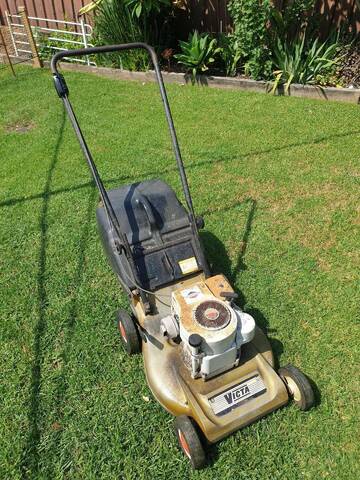
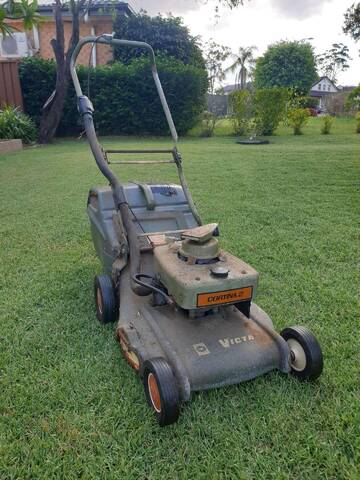
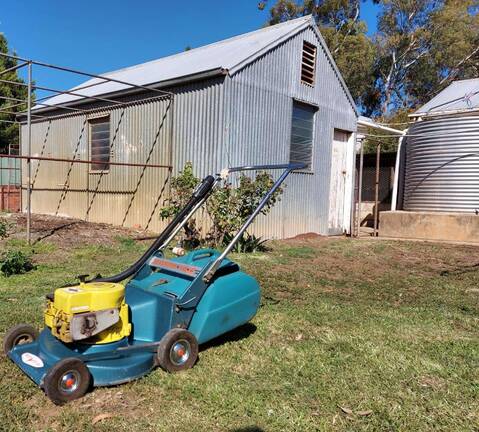
I have a power torque Victa. I was using it and all of a sudden, the engine stoped. I had no spark. I changed the coil and the ignition module. whilst I was doing all this, I rebuilt the decompressor and cleaned out the carburettor and changed the starter o seal. I now start it and smoke comes out from the decompressor as it starts.
It retracts as go to start it and almost breaks my fingers and cannot start it.
I had the disc on but then I took it off and tried to start it and it was the same. my fingers still feel numb and sore. How does the blade disc effect the starting. I am thinking it is to do with the flywheel timing but not sure.
It is the extra weight it needs to get it spinning and yes it takes some time for your fingers to stop hurting, we have all been caught out over the years
thank you. is there any way to put the disc on. I would usually line up the nut with the blade boss and tighten it. I really doubt the flywheel has moved so it must be the disc.
Flywheel can't move it has a flat side on it, the disc must be tight, the washer must fit on the lugs on the blade boss and then the nut tightened up. Can you get it tight enough without a rattle gun, I'm not sure, never tried. Others here may know if you can
Either that or take off both blades and rig up a brace that fits the blade carrier using a piece of wood and two bolts in the position of the blades. Get a long ring spanner, (I use one from the tractor tools) and you can use your foot on the spanner and pull back on the piece of wood. Works a charm.
Thanks everyone. I will put on the blade disc. Is there any specific way it needs to be on in relation to the piston timing position as the disc is oval. Thanks
This is maybe something to do with the ignition coil orientation as I had customer who asked for suggestions through our Not Allowed online enquiry with the same issue after he replaced with PT ignition coil it kick back when started. Try to change the orientation of coil or try with old used ignition coil and original used ignition module if it does same thing.
CM
Last edited by Bruce; 09/03/2208:27 PM. Reason: Advertising Breach
I suppose I can’t blame you for trying to plug your business but it looks a bit poor form to me. Especially as Norm has already provided the most likely issue and your reply acts like the thread was terra nullius.
I just fitted the blade disc and no kick back. it started but ran rough and then would not start. I still have a spark on the spark plug. I have been looking at the carbs master and will be rebuilding the carburettor properly. I have never worked on power torque engines or g4/LM carburettors before. learning as I go. the videos are helpful however the coil has nothing to do with it as it only goes in one way and you set the depth. the blade disc can go in any way and the orientation does not matter as Norm had told me and as I tried it out today. This only leaves me to rebuild the carburettor.
The most important thing with the carby is the float needle, don't waste time with the plastic ones, you must use a viton tipped one. The float needle is 90% of the carby problems
In your efforts to rebuild the carby, remember that service part CR03773A is designed as a whole unit replacement for the carby. Consider the cost of the entire replacement vs trying to work with what you have. Please don't misunderstand, we're all about that service life and replacing the $2 O ring and fixing things, but consider that it may take several parts, several tries, and that may still not resolve the issue, and you may then bite the bullet and buy a new carby, which also may not resolve the issue because the issue was something else that has been missed. So just consider your options
I rebuilt the carburettor. It still won’t start however no kick back. The compression is 79 so probably why it won’t start. They should be 100psi to start shouldn’t they?
I have a new set of 160cc rings. What would be the best way to change the rings to fix it. On the old ones you would just in bolt the head and pull out the block. It looks like the whole engine needs to be pulled apart to replace the rings.
dmitr 79 psi is good if using the tester with the longer rubber tube ,I have had tons of mowers that run at 50 psi. From memory the short tester will be about 10 psi more. I've seen a lot of mowers that people use until they are down to 40 psi and had mowers run for 10 years at 50 psi as long as the bore and rings aren't scored.
I usually run them on start ya bastard and if it runs then it must be a carby fuel related problem ,if it doesn't run on starter fluid it's spark or crank seal problem or blocked muffler or port.
I usually make sure the 3 starter bolts aren't loose because if they are loose the crankcase can leak.
There are 2 seals that must seal on the starter ,one is the starter housing large o ring ,the other is a seal in the centre of the starter then a bearing seal under the motor.
One way of checking if the crankcase seals are leaking is a Vacuum test.
Some times when the crank seals are bad you can put some oil in the plug hole then replace the plug ,spin the motor over and oil leaks onto the outside crankshaft near the blade plate ,a little difficult to see with a powertorque motor as the flywheel is in the way and is why a leak down test would be better.
If I want to rule out the decompressor valve as a problem I would remove it and put a spark plug in the hole for testing.
thanks I will do a vacuum test tonight. don't ask how I even own a vacuum tester. I think it was when I was rebuilding my still blower or edger. I could first try to start I with out the muffler outside on the concrete so I don cause a fire in my garage but that will hopefully annoy the neighbours if it starts. I will just take some phots of the muffler port
My way of testing them is a squirt of starter fliud in the plug hole, and if it fires or gives an attempt to start you can be fairly sure the problem is carby related or possibly as Max said the seal on the pull starter. I doubt this would be a cause because as you said in your first post that it was running.. Putting it in the plug hole means it doesn't have to suck fuel in through the crank, If no attempt to start as Tyler? mentioned, remove the muffler and look in at the piston and if you see any scoring then we have to consider it may have been straight fueld
Yes it is a quick easy first check , to look at the bore, rings and piston in the port hole as Tyler and Norm suggest.
The only other things to check would be the spark plug as I've had a lot that work one minute and misfire the next so I like to use a plug out of a mower that I know runs well or try a new plug.
I would also check the head gasket isn't leaking but that will show up when doing the vacuum test.
yes I have have poured a bit of fuel/ oil in the spark plug hole. I pulled it many times to start it and it would not start. I could smell the exhaust so the cut of switch is correct and it is getting fuel in the carburettor and I could still smell the exhaust from trying to start it even without pouring some fuel in it. This is still a great tip. would you pull out the piston and rings even if they are scored since the compression is 79 psi?
So correct me if i'm wrong please. from what I gather from the videos, I block the muffler port, carburettor port, spark plug and decompressor port. To pressurise or create a vacuum, I attach a hose onto a nipple to a backing plate I make up and attach it to the carburettor. If it does it not matter any where I place the nipple, I can get a brass threaded fitting and braze a nipple on to it and attach it onto the spark plug port as it would be easier to braze a nipple onto a brass thread fitting then to a steel plate. Do I have to move the piston around or place it anywhere? Finally, what result should I get for the pressure and vacuum. It could be a top or bottom seal or the case seal. Thanks for you help.
I would attach the nipple to an old plug as long as you smash out the porcelain .
Block the intake and exhaust port ,rubber hose and wood plugs / plastic etc and hose clamps would work. for the intake.
The exhaust you may need to g clamp a flat plate over the exhaust port with a gasket or flat rubber inbetween the plate and the port.
The piston is at bottom dead centre for testing and you can rotate after you have vacuum applied.
I don't think the bore etc will be scored at 79 psi. but is easy to check.
To see where the leak is if you have one ,you would need to use soapy water where you are checking for a leak so if head gasket and the 2 port block offs aren't leaking then you know it must be crank seal with a pressure test.
With the vacuum test you will know there is a leak if the needle falls.
It looks like it would have to be a leak in the crank case. The compression is good enough, I have a spark and I get combustion with the carburettor and even with fuel in the head. I can’t think of anything else. I will test it tonight and let you know and hopefully find the leak. What pressure should I pressurise the crank case to?
Just keep an eye on hard rubbish piles you can often find a PT there with buggered chassis or wheels and 98% of the time the motor is in pretty good shape, not worth spending too much time and money trying to get one running