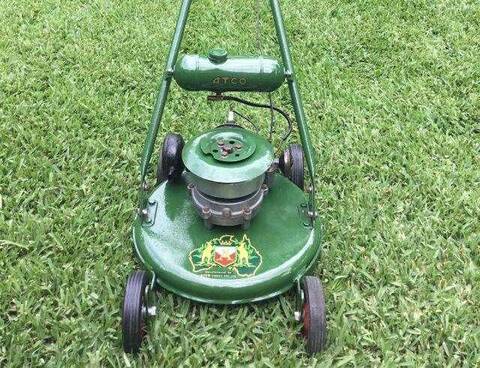
I recently changed the head gasket on a Briggs Quantum and while the bolts were out I gave them a good go on the wire wheel. Trouble is I think I ate into the thread because half of them don't want to tighten up. I may have damaged the thread on the block as well. Can anyone tell me what size and type of thread the head bolts are standard and also what size and thread type I should replace them with so I can tap a new thread. Also do I need to upsize all the bolts or just the ones that won't tighten. Model 121702 Type 0191 01 Code 90121125
Last edited by Dave107; 06/11/1905:53 AM. Reason: Forgot numbers
I've just had a look on Ebay and they have 131 piece kits for about $40. Problem is not sure whether I need the Imperial Thread SAE or HSS Metric kit. Anyone know which type I need?
Pretty sure without checking is that they will be UNC but for what it is doing you could get away with Whitworth. Before you go any further you need to work out what the problem is, have the threads stripped out, if not no need for helicoils. How far are the bolts threading into the head before stopping?
Hi Dave, The holes may have already been bad, plenty of old quantums around, try tip shop. get some more head bolts and try again. Reminds me of when my brother got a job with a mechanic. Had to change sparkplugs in a BMW, stripped all 4..... speedy
........................Keep your blades sharp......................
Some of the little european Ford engines were also pretty bad for that speedy - or just getting stuck in altogether and snapping in half if left too long.
I have heard of a guy who was a real p.i.t.a. to his mechanic (numbering tyres to check if rotated, etc) - the mechanic retaliated by loctiting the plugs into his 626. Guy took mechanic to court and won.
I have heard of a guy who was a real p.i.t.a. to his mechanic (numbering tyres to check if rotated, etc) - the mechanic retaliated by loctiting the plugs into his 626. Guy took mechanic to court and won.
This is what I don't understand with mechanics. You are entrusting them to take care of your car not to mention paying handsomely for it, but they resent the customer taking steps to try and make sure all work requested has been performed -something often difficult to do -and we get low mongrels like this. Ex͟a͟c͟t͟l͟y why they need to be checked on in the first place.
Ahh, if only victa had kept producing the thumblatch catcher series, they would be in better shape today!
I get what your sayin' Speedy and it makes sense but I've put in a few hours on this little 5hp Briggs. Stripped and washed. Honed and painted. Lapped me the valves too. Given the intake and exhaust ports a bit of a grind and polish and given the Walbro carb a new wardrobe. Ha. I can see you shaking your head from here. I know. I know. I've got way too much time to spend on it...... Thanks again mate
As mentioned above the bolts are 5/16 UNC 18 threads per inch with a 1/2 inch AF head.
The top 3 bolts are longer , length 2 and a 1/4 inches .
If the alloy threads are not too damaged you can re-cut them with a cheap eBay tap and if the bolts aren't too damaged a cheap die nut will repair them but that will be just under $23.
Thanks for the offer NormK. I appreciate it but its a bit of a hike for a handful of bolts true? And Max, you are a top bloke. Thanks for posting those files. Saves me time and mucking around. Just got a quick one for ya. Lets say i have perfectly good head bolts, perfect length and thread. 5/16" UNC 18. Now if the threads on the block are damaged and worn, and the original size is 5/16", I'm assuming I'm gonna need to tap the next size up and thats a 3/8 and she looks alot bigger.....
And there it is, it looks like we've gone full circle and as such you'll probably have to buy a full Helicoil kit, but it will be enough to do every 5/16th thread in that engine. The sad part is that the Imperial sizes are more so being sold from the USA and the UK where they seem to be far more expensive than metric counterparts that are commonly sourced from our new Mother country.............China.
Cheers, BB.
I live a 24 Hour lifestyle, but every now and again I seem to fall asleep, well at least that's what my wife tells me.
The cheapest way would be to drill the threaded holes out to 5/16 then tap them to 3/8,buy 10 of 3/8 x 2 1/4 unc socket allen head cap screws, a bolt shop should be around a $1 a bolt the ebay ones are about a $1 each but postage makes them not worth getting.
Drill the cylinder head out to 3/8. That's what I would do.
[img]http://[/img]https://photos.app.goo.gl/53bDapT3qVZLktrK9 Ok guys. No work 2morrow due to rain. The lady of the house gonna be out all day. Got my kit from from a man that was selling one. I'll keep you all updated.
Hate chime in late but had make sure brain was in gear before opening mouth.
IF 5/16 course thread you can drill with a 5/16 bit and re-tap at 9mm-1.25. Make sure to use rubbing alcohol on the drill and tap for smoother finish and to prevent the tap from sticking in the aluminum. Of course assumes that you can drill straight with no wobble and the same when tapping. Plus you would need open up the hole(s) in the head slightly.
I still feel that the Helicoil is the best way to go as it'll be stronger than straight alloy thread. Just don't go too silly with the tightening of the head bolts as you only have the short Helicoil threads and not the longer variants.
Cheers, BB.
I live a 24 Hour lifestyle, but every now and again I seem to fall asleep, well at least that's what my wife tells me.
The tap chamfer is the tapering of the threads to distribute cutting action over several teeth. The type of hole to be tapped has much to do with the chamfer style of that tap that's best suited. Some holes go all the way through; some, while not through-holes, are relatively deep; some are quite shallow (a little deeper than diameter). Each of these three kinds of holes - through, deep-bottoming blind, and shallow bottoming - has a tap chamfer best suited to threading requirements.
Taper Taps - This style, with a 8-10 thread chamfer, has the longest chamfer of the three to distribute action over the maximum number of teeth; and the taper also acts as a guide in starting the cutting action in the hole. Taper style taps start the thread square with the workpiece. Taper taps are commonly used in through holes and in materials where a tapered guide is necessary.
Plug Taps ( Seconding Tap) - This style, with a 4-6 thread chamfer, is most widely used in through holes and where there is sufficient room at the bottom in blind holes.
Bottoming Taps ( Finishing Tap) - This style, with a 1-2 thread chamfer, is made with just enough chamfer for starting in the hole; as the name implies, it is designed to thread blind holes to the bottom.
That should get all of us on the same page when it comes to the basic threading taps. Now the UK/OZ terminology makes a little more sense. I think it would make more sense to be Starting, Intermediate, and Finishing but that's probably just me.
The terminology between countries does make it more difficult to be same page when it comes to repairs or anything at times. This is why I posted what I understood were the three basic threading taps. Of course there are numerous other specialised versions of taps.
Eventhough there are different types of threads, here I mainly deal with SAE and Metric but have come across an engine with British threading.
What a pain to get taps and dies for an one time project. Even with both SAE and Metric die and tap sets I finding the need to buy even more of the more non common sizes as manufactures try to propriety some of the screws and threads that are more common to their part of the world.
Here when I was in school in the 1970's the teachers were making out that the world was switching to metric. Boy were they wrong. LOL !