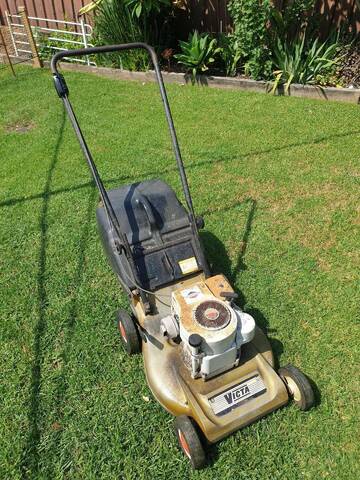
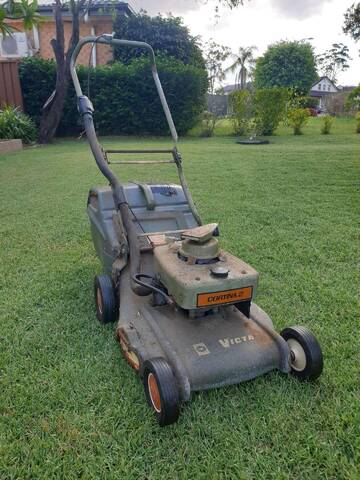
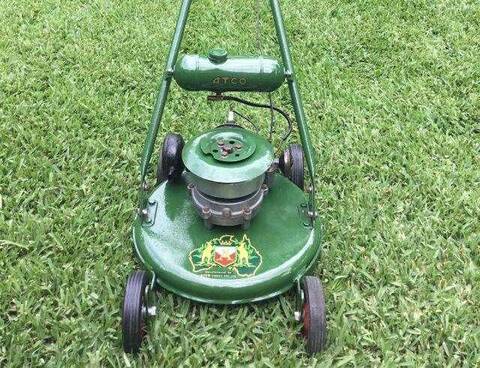
I am after assistance to fix my Late Model 2 Stroke Victa Lawn Mower.
To give you some information. I have replaced the Spark Plug. I have purchased a Victa Carby Kit and replaced the Diaphragm , Cutoff boot and O rings. I am still using the original Needle and springs.
The Poppet valve, is an A, 3, C type Poppet Valve and it is set to C. Without a Rev Meter, I am thinking it is revving at about 3000rpm, but I could be wrong.
When cold, I set the throttle just past the Cold start spot and pressing the primer bulb about 6 times it will usually start within 2 pulls and keep running until turned off.
Whilst running, it seems okay, it may bog under heavy load, but it will regain speed once I back off.
My Problem
If I restart the lawn mower within a minute of it being turned off , it will usually restart.
But if I leave it off for 5 minutes , it will not restart. And I have to try priming it and pulling the pull cord so many times for it to restart and sometimes I succeed and sometimes I do not succeed and need to go to a backup lawn mower to finish the lawn.
After an hour or so, it may or may not start. But if I try it the next day it will restart.
Does anyone, advise what I can do to fix it. I quite enjoy the 2 Stroke mower and feel something minor is amiss causing these issues.
I don't want to just throw money on stuff hoping to fix the issue, but if advice is this is the cause and more than likely fix the issue I am happy to proceed and advise all, with a follow up post.
Hi Harry, I'm not sure if the way I modify these carbys helps with this problem but I haven't had people tell me they are having this problem. 2 strokes have always had this sort of problem, it was really bad with the early Victas, not so much with the Powertorques
Usually with this type of problem I would do a service starting with checking the compression with a compression tester.
Sounds like the carby is sorted but it may have a plastic float needle that is sticking ,I would buy the metal needle with the float clip.
I've had starting problems when the 3 starter bolts come loose so every motor I work on I always check the bolts are tight and always tighten the screws that hold the intake manifold to the engine as they can come loose with age.
Just to rule out any decompressor issues I would remove it and screw an old spark plug in , a short plug will do, the same plug the engine takes.
Using the plug to block the decompressor hole will allow you to now feel the compression when starting and when the motor gets hot you should be able to tell from the starter if the compression is much less when hot than when cold.(This way you don't need a Comp tester)
If the above fixes the problem then put the decompressor back in and if the problem comes back you know the decompressor needs replacing.
I'd also take the fuel hose off the carby and turn the fuel on to check the fuel flow rate from the fuel tap as I often need to clean the fuel filter to get a better flow rate.
I usually find with the metal needles the motor requires less priming to start.
If you already have the metal needle just use that and see how it goes.
Yes once you replace the decompressor with a plug if the compression is down you will know the rings / cylinder are worn.
If the top of the plug is in the way of the top plastic engine cover when you block the decompressor hole I would just break the top porcelain part of the plug off.
Another test is to start the mower and turn the engine off by turning the fuel tap off and just before the engine stops if it runs a lot quicker you have an air leak.
(If the engine accelerates or runs more quickly just before it stops, it could indicate that there is an air leak somewhere)
This has probably been covered here but I have a bad migraine and struggling to even read. I recently had a very similar problem with a Victa Utility 2 stroke I was recently given though it would start hot it just wouldn't rev. It turns out the plastic carburettor cover was turned away from the level mark meaning once it warmed up the float wasn't allowing enough fuel in to rev. I had no idea of the level mark on the white carburettor cover because my primary mower is a much older hand wind start (so much easier than pulling the cord (but I'm having trouble after replacing the spring on it the other day, (I'll get to it but not today) Victa Mayfair with the metal carby which is so simple. Though friends own a local mower shop and were quick to point out the problem from a photograph I took and they really are a simple carburettor until you lose the needle in 4 inches of grass. New needle, new white cover with new primer and new o'ring are sitting in my kitchen (don't ask, I won't lose it in there). I was shocked though when the owner explained how to set the float height by adjusting the brass insert where the needle goes, he'd given me another cover with good primer bulb but it was a cheap after market unit he found in his stock (and gave it to me free saying it was used but in good condition) but somehow I cracked the fuel plastic nipple inlet slipping the fuel line back on. His son gave me another new unit better quality yesterday and set the float level with a file on the plastic needle, they've changed.
When did brass needles disappear? Yes, I'm feeling old!
I purchased the Metering Lever from [Censored] and installed the metal needle and the Metering Lever into the Carby.
I pumped the Primer bulb 5 times. It started on the 3rd pull.
I checked the RPM on Startup with the Throttle on Run. The RPM fluctuated between 3020 - 3040 - 3060.
After 30 minutes of cutting the Lawn. The RPM fluctuated between 3120 - 3140 - 3160.
I Turned Off the Fuel Tap and the Lawnmower ran normally until 1-2 sec before it cut out where it revved a little bit higher, maybe 100 rpm higher. So, I don't think there is an Air leak. But you guys might need to advise.
I Turned the Fuel Tap back On, Pumped the Primer Bulb 5 times, where it took about 10 pulls to start. The RPM fluctuated between 3120 - 3140 - 3160.
After a few minutes of running normally. I turned the Lawnmower Off normally by putting the Throttle to Off. I then tried to restart the Lawnmower. The Throttle was set to Run, and it started after 2 pulls. The RPM indicated was 3120 with no fluctuations.
So, when I get a chance again, I need to retry and also leave the Lawnmower off for a bit longer maybe 10-15 minutes to see what happens.
I don't think I fixed it yet, I have probably eliminated a possible sticky needle. I still need to set the throttle just past the Cold start spot to start when cold. This never used to be the case originally and it would always start on first pull. So even though I have replaced the Diaphragm and Orings on the Carby (Carby Kit). Maybe the Control Spring and Return Spring are not working Properly.
My next test will be to remove the Decompression Valve, block the hole and try to start the Lawnmower Cold and then when hot after 30 minutes to check compression and see if the Decompression Valve is faulty.
I pumped the Primer bulb 5 times. It started after about 10 pulls of the Cord with the Decompression Valve removed. (Not what I expected)
Whist the lawnmower was running I still had the Decompression Valve connected to the black hose, it would cause the valve to close.
I run the lawnmower for about 30 minutes when it run out of fuel. (I forgot to fill Fuel Tank).
When I filled Fuel Tank, I noticed that fuel was leaking from the Primer Bulb hole.
I presume this means that even with the new metering lever in place it didn't stop the fuel from over filling and coming out of the bulb.
I had to tap on the white Primer Cap to get it to stop flowing through the Primer Bulb hole.
Whilst the Lawnmower was hot , I checked Compression, it felt about the same amount of compression as it is cold.
So now, i am curious as to why it leaked fuel through the Primer Bulb, I will reinstall the Original Victa Primer Cap as maybe the aftermarket Primer Cap bought through Amazon is no good. I may keep using the aftermarket Diaphragm.
Any ideas, as to why without the Decompression Valve it took 10 pulls to start from cold and why it overflowed.
Harry are you saying you removed the decomp and obviously put a spark plug in the hole. If you can start it like that it needs new rings, it should give a big kickback
Harry are you saying you removed the decomp and obviously put a spark plug in the hole. If you can start it like that it needs new rings, it should give a big kickback
You are probably on the right path, as I didn't think it would give me a kickback.
More info.
Day 2 later on,
As I was getting nowhere. I decided to pull apart the Carby and see what was happening.
Upon re-installation I found it was jamming on the Kill switch Pin. This originally occurred quite a while ago before I got it working but didn't think it was an issue now.
After trying to adjust the throttle cable and throttle cable screw (near Filter housing), I decided to leave it out. But leave the Kill switch hole open.
After Priming 5 times and pulling the pull cord 3-5 times it would start but now rev up to 4200 rpm.
So , I get the feeling it has some thing to do with the Carby and Throttle Cable setup and compression.
But I am about to give up, i think it is beyond me. I don't know what to do next.
And as I have an older green base 2 Stroke Lawnmower, I am better off pulling the old green base Motor and installing it on the newer Victa base/Covers with its 4 Blade setup. This motor always starts first try and doesn't give me any issues when hot.
The Powertorque motor will not kickback with the spark plug in the decomp hole ,Victa made Powertorque motors that never used a decomp the hole was never drilled or threaded in the head on some Victa mowers .
Kickback is usually felt when you try and start the motor without the blade plate fitted as the blade plate acts as a flywheel also the spinning mass is reduced on a Victa 24 with a V belt to the cutter plate.
I even made a video showing no kickback on a Powertorque without the blade plate fitted but the boss on the crank was slightly heavier than standard because the mower was a 460 utility
.
The compression hot sounds ok if you can still feel a fair amount of compression so you can put the decomp back in.
Just sounds like a carby issue, if the kill switch is playing up buy a new rubber for the wire.
If fuel comes out the primer bulb it means the needle and seat in the carby are not shutting off and the fuel level in the carby gets too high and fuel leakes out the primer ,fix the needle and seat so it shuts off and has a good seal when the fuel is at the right level and this will stop fuel leaking out the primer bubble.
Video below at the end shows how to test the needle and seat to see if it's sealing when closed, without a pressure tester you will need a hose connected and blow air down the fuel inlet to see if it's shutting off.
So Max, why do I have massive kickback problems with my PT's on 24 bases. They need at least 1kg added to the crank to prevent them kicking back and near breaking my fingers
I thought we talked about this on a lot of occasions , that was why I made the PT video to show you don't need a lot of weight on a PT to stop it kicking back under normal circumstances.
As we know
Flywheel Mass and Engine Dynamics: The flywheel on an engine serves several important purposes: it helps smooth out the delivery of power from the engine, maintains momentum during the power stroke, and provides mass to aid in starting. The larger the flywheel mass, the more inertia it has, and the smoother the operation of the engine can be.
Direct Crankshaft Connection: In a mower where the blade plate is directly attached to the crankshaft, the flywheel mass is effectively utilized throughout the starting process. The engine and blades are directly linked, meaning that when the engine gains momentum and starts firing, this momentum directly translates into rotational speed for the blades. The inertia of both the engine and the blade plate works together, making starting smoother and minimizing potential kickback.
V-Belt Drive System: In a V-belt drive system, the engine's rotation is transmitted through the belt to the blade plate. This means that the mass of the blade plate does not contribute effectively to the flywheel effect because the load (the blade plate) is not rigidly connected to the engine. When starting, the engine is attempting to overcome the resistance of the blade plate, but the V-belt tends to absorb some of the energy required to start the blades turning. As a result, the effective flywheel mass is reduced because some of the energy that would be contributing to inertia (as seen in a direct connection) is dissipated through the belt system.
Added Flexibility and Loss: The flexibility of the belt system means that not all the rotational force generated by the engine is transmitted immediately to the blade plate. Slippage or tension variations in the belt can further reduce the effective mass that contributes to inertia during startup. Additionally, if the blade plate has a significant mass itself, it requires more energy to start moving. The V-belt drive can cause a lag or delay in how effectively this mass contributes to the overall inertia during startup.
A V-belt drive system separates the engine's power delivery from the blade plate, which diminishes the effective flywheel mass during starting. The inertia and benefits of flywheel mass aren’t fully realized because the engine's energy isn’t transferred directly to the blades, leading to a potential for increased kickback and reduced starting efficiency compared to a direct crankshaft attachment.
I suggested adding mass to the crank on the PT crank with a v belt drive to overcome the kick back problem but that's not the only way to overcome the kickback problem.I've suggested other ways before but because you had the weight working you weren't interested in trying something else ,which is fair enough.
Retard Ignition Timing: Retarding the ignition timing can help reduce the likelihood of kickback. If the ignition fires later in the compression stroke, it allows the piston to move down before the combustion pressure can push it back up, minimizing the abrupt force on the starter mechanism. However, this may also affect engine performance, so finding the optimal timing is essential.
Adjust Decompression Mechanism: Decompression Timing: Modifying the decompressor to activate later can be effective. A decompressor helps relieve cylinder pressure during starting, making it easier to turn the engine over. If you delay its activation until the engine is at a point where it has started turning over, the compressive force can be reduced, effectively lowering the likelihood of kickback. Automatic vs. Manual Decompressor: Consider utilizing an automatic decompression system that engages during starting but only releases after startup. This allows maximum assistance during start without affecting operation once the engine starts running.
Starter Engagement Mechanism: A more sophisticated starter engagement mechanism can help manage the initial load on the starter. A system that smoothly ramps up the tension in the belt or utilizes a soft start can reduce the kickback effect.
Using an Anti-Kickback Starter: There are starters designed specifically to minimize kickback. These starters can incorporate features like a ratcheting mechanism that allows the starter to disconnect under certain load conditions, preventing the rotational forces from being transmitted back to the starter cord.
Improved Belt Design and Tensioning: Review the design of the V-belt drive. Using a belt with different material properties or improving tension management can help ensure a tighter grip and reduce slippage. Proper belt tension can minimize energy losses and allow for better power transfer, also aiding in smoother starts.
Flywheel Design: If you cannot add weight, consider designing a flywheel with a different configuration. A flywheel with more mass towards the edge (increased rotational inertia) can store more energy and provide smoother power transmission, to help eliminate kickback.
Yes Max, Adding weight to the crank is the way to go, but it is very time consuming for me on my little lathe. I did have a full crank Tilta -Cut that suffered violent kickback and I ended up adding weight to the crank and that solved the problem. Once they have this additional weight they start easier and have more power because of the extra spinning mass
With Kill Swicth bypassed, Primed 5 times and now in the cold position it fired on the 3rd pull. Did some lawns for half hour and now similar to before will not start even though I let it cool down for an hour.
So I don't know what to do next. I started my green base 2 Stroke it started first go runs at 4100rpm. I can leave it rest for an hour and it will start in the run position first pull. It might rev a bit high , but I might need to do the brass washer trick to slow it down a bit.
I might do a heart transplant and use this motor on the newer base.
Nothing new about any of this Hazzaman, I think with worn rings the bore expands slightly and the worn rings just can't create enough compression.
Hi Max, I had a GCV160 Honda that was giving me big kickback problems on a 24 just as bad as the PT's do. I'm not sure if they lightened the crank on the GCV's but all I can think of. I fought it for a few days trying to add weight to it but couldn't hold them tightly enough in position so ended up pulling the motor off, put it on a standard Victa base and out the door. The bloke sent me a text a few days later saying he was happy with the mower and how well it ran. What I don't understand is why I don't have kickback problems with the Deutschers apart from the bigger ones with the cam issues
Hi Harry, It could be compression too low when hot but you really need a compression tester to check that .
Ignition Coil: If the ignition coil is getting weak when hot, it might cause intermittent starting issues. You can test for spark when the engine is hot.
Compression and Engine Condition
Compression Check: Use a compression gauge to ensure the engine has adequate compression. .
Air Leaks: Check for air leaks, particularly around the intake manifold or carburetor gasket. An air leak can lean out the mixture and make it harder to start.
Possible Considerations
Overheating Issues: If the mower is overheating, it can lead to "heat soak" issues, where it gets hard to start after being turned off briefly. Check for blockages in the cooling fins and ensure the engine is not excessively dirty.
Cleaning and Maintenance: Regularly clean the air filter and ensure it's not blocked, as a dirty air filter can affect performance.
I'd check fuel flow when it won't start as sometimes the fuel cap breather doesn't work ,also when you turn the mower off turn the fuel tap off that will rule out over fueling.
Hi Norm,
I'm sure you would have Deutscher kickback problems if you used a Powertorque or the Honda motor.
When you look at my video of starting the Powertorque without a blade plate the engine spins fast from the starter cord but I remember starting Victa 24's with the side pull starters and they were so much slower to spin over as you just end up getting drag from the v belt drive turning the blade plate,this just adds to a kickback problem.
You can't compare one motor that doesn't kickback to another that does unless you know all the specs and condition of the motors as there are a few things that contribute to kickback.List below of specs that can be changed so the engine can suit other applications.
Compression Ratio: Higher compression ratios can lead to stronger kickback. A higher compression means that the engine requires more force to turn over, which can cause the starter mechanism to experience sudden reversal when the ignition occurs.
Ignition Timing: Incorrect ignition timing can significantly contribute to kickback. If the spark plug fires too early while the piston is still rising (before top dead center), it can lead to a violent reaction that causes the engine to kick back.
Flywheel Weight: A heavier flywheel tends to smooth out the rotation of the engine, helping to prevent sudden changes in momentum that can lead to kickback. Conversely, a lighter flywheel may exacerbate kickback.
Crankshaft Design & Weight: The design and weight of the crankshaft can influence the inertia during startup. A heavier crankshaft may absorb some of the shock associated with kickback, whereas a lighter one may not.
Starter Type: The type of starter (manual pull starter, electric starter) can also affect the experience of kickback. Manual starters can provide less mechanical advantage than electric starters, potentially leading to more noticeable kickback.
Fuel Mixture: The air-fuel mixture can affect engine performance. A rich mixture may lead to lower temperatures and incorrect combustion timing, which can contribute to kickback.
Engine Condition: Worn components, such as valves, piston rings, and bearings, can lead to inefficient combustion and increased likelihood of kickback.
Cold Engine Effects: Starting a cold engine can change its dynamics. Increased friction and oil viscosity can contribute to the behavior of the engine when it first starts, potentially increasing the chance of kickback.
Factors Affecting Kickback Due to Cam Design
Camshaft Profile: The shape and design of the cam lobes influence the timing and duration of valve opening and closing. A more aggressive cam profile can result in quicker valve motion, potentially increasing the likelihood of kickback if the engine is not designed to manage such forces effectively.
Timing of Valve Events: If the camshaft timing (when the intake and exhaust valves open and close relative to the position of the piston) is not optimized, it could lead to back pressure during the compression stroke. This can create resistance when attempting to start the engine, leading to kickback.
Compression Ratio: The cam design can influence the effective compression ratio of the engine. Higher compression ratios can lead to increased resistance when starting, resulting in more potential for kickback. Camshafts designed for performance often increase compression at specific points in the engine’s cycle.
The design of the decompressor in a small engine can play a significant role in reducing or eliminating kickback during starting.
Yes the Honda 4 stroke crank doesn't look to have much weight out from the main shaft ,the early Victa full crank has a lot more outer weight on the crank ,If adding weight to a powertorque is time consuming why not just fit the full crank 2 stroke motors to the Victa 24 mowers.
There are a lot of different specifications a factory can change on a motor to stop it kicking back when starting when used in other applications .
I see a lot of people that have an original working mower from the factory then when the engine is worn out they just take an engine that is not to the factory specification to suit their mower and fit the wrong motor then it kicks back when starting.
Then you end up with people selling cheap mowers that don't run.
Hi Max, fitting a full crank motor to the later 24 bodies is not straightforward, I have drawn up a sliding plate that should allow me to fit F/C motors on the later bodies but I would need to get them laser cut and it all ads to the costs and at this stage I am not 100% sure it will work
Looking at the pic below it just looks like you get a flat 1/4 inch plate and drill the holes to fit the PT holes in the base then drill 4 holes for the full crank motor and drill a centre hole then make the adjuster for belt tension.
Yes Max, I was thinking of going the other way putting PT motors on the F/C bases. The PT motor is great on the 24's once you get past the weight problem on the crank and I have a lot more PT motors here than full cranks. I have a lot of 6mm plate here but the only way I can cut it is with a grinder as I don't have a plasma cutter. Think I will have to get one