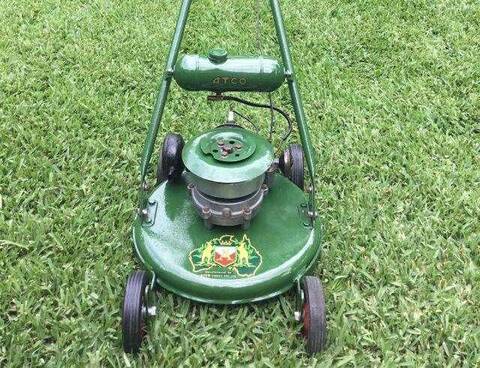
Mark, the first question is whether you actually need to replace the rings. Smoke from a 2 stroke depends mainly on how much oil you put in the fuel, and how much old carbon has built up in the exhaust port and muffler. To find out whether you need to replace the rings, first pull off the spark plug lead, then pull the starter cord and feel the amount of resistance. Then remove the spark plug, put a spoonful of engine oil into the cylinder through the spark plug hole, reinstall the spark plug without connecting it, and pull the starter cord again. If the resistance (that is, compression) has increased quite a lot, you need new rings.
If you do need new rings, remove the muffler and look at the side of the piston through the exhaust port. If it is scored, you need a new piston as well. If it is not scored you probably don't need to replace it unless the ring grooves are damaged.
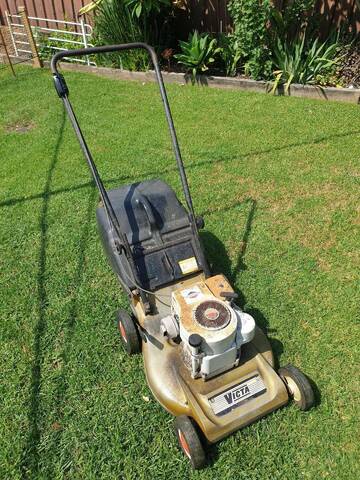
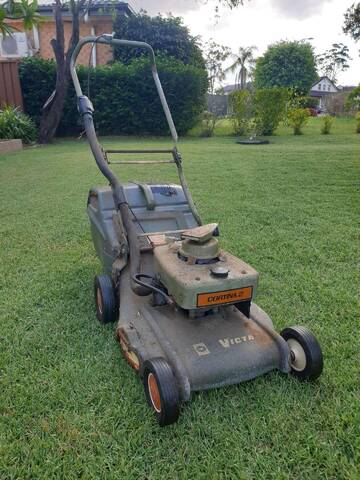
Replacing the rings can be done several ways, depending on the engine design. Usually you remove the cylinder head, then remove the cylinder from the crankcase by sliding it over the piston. You can then remove the old piston rings by flexing them gently without breaking them, until they just slip over the top of the piston. This is practice for putting the new ones on without breaking them. Note which way up the rings go and which is which. Next break one of the old rings, and grind the end of it square to the sides of the ring, to make it into a ring groove scraper. Scrape the carbon out of the ring grooves, keeping the scraper square to the sides of the groove and ensuring you do not remove any metal. It is a bit tricky getting right up to the pegs in the ring grooves that prevent the rings from moving around the piston. Just take your time and be careful. When the piston is clean, you put the new rings on. For low-tension rings like a Victa has, you gently open them by the two free ends until they will just barely slide over the top of the piston to reach the grooves. Of course you have to put the bottom ring on first. They can only go on one way up because of the shape of the ring groove peg, but the top and bottom rings may be different from each other so put the correct bottom ring on first, then the top ring. "Time" each ring rotationally before you expand it and slide it on, so the ring groove coincides with the position of the peg: do not put it on in the wrong position then try to move it around the piston over the peg after it is in the groove. Oil the piston and the rings/grooves. To slide the cylinder down over the piston you have to compress the rings. With these weak little rings you can do it with your fingers, one ring at a time. If you can't, you need to cut a thin piece of steel or aluminium sheet to use as a ring compressor, with a piece of tie wire to squeeze it down to the required diameter. If you use a compressor, when the cylinder has passed over both rings, cut the tie wire, straighten out the metal sheet, and take it off the connecting rod. Then you can bolt the cylinder to the crankcase and put the cylinder head back on.