Hi folks/bruce,i have a villiers mk10 4 stroke engine which im going to turn into a stationary engine display.i cleaned out the carby,drained the base oil,because the fly wheel was already loose i removed it and cleaned the coil and points.i took the head off to find t.d.c and lined up the marks on the fly wheel and the block because there is no key-way.i require info on ignition timming and i cant seem to find a manual in "my stuff".i have also looked on the web for info but not enough explanations on point set up etc...ken
Be sure to set the point gap before you time the ignition - the size of the gap changes the timing. Setting the timing is not a very precise process. I suggest you set it for 5 degrees before top dead center. If you advance it too much, it will kick back on the pull-rope when you are starting it; aside from that issue, more advance will increase the maximum power, but kick-back is actually dangerous, and you don't want anyone getting hurt. 5 degrees is a reasonable, fairly conservative value that is not likely to kick back so long as the rope is pulled at normal speed or faster.
To locate a firing point mark on your flywheel, measure the outside diameter of the flywheel and multiply by 3.14. Then divide the result by 72, which gives you the required distance in inches or millimetres before TDC. Make a stationary mark on the engine in a visible place. Temporarily install the flywheel and find the point on the outside of the flywheel where the points start to open. Make a permanent mark on the flywheel there: this will be your timing indicator. Measure anticlockwise the 5 degree distance calculated above, and make a narrower permanent mark on the flywheel at that point: that will be your TDC mark. Next you set the flywheel on the crankshaft in the correct position. Put the crankshaft carefully on TDC, then slide the flywheel onto the crankshaft taper with the TDC mark aligned with the stationary mark on the engine. Rock it back and forth, to check the piston is actually on TDC when the TDC mark is aligned. Tighten the flywheel retaining nut. From then on you can use a timing light if you want, to check the ignition timing. To make small adjustments in timing, you can adjust the breaker gap rather than taking the flywheel off again, but if you do this, check that the breaker gap is still close to the correct value or you will weaken the spark. Of course if you have timing adjustment slots in the breaker point mounting plate, you can slide the points on those to make fine timing adjustments, while still keeping the correct breaker gap.
Hi folks/bruce,i have a villiers mk10 4 stroke engine which im going to turn into a stationary engine display.i cleaned out the carby,drained the base oil,because the fly wheel was already loose i removed it and cleaned the coil and points.i took the head off to find t.d.c and lined up the marks on the fly wheel and the block because there is no key-way.i require info on ignition timming and i cant seem to find a manual in "my stuff".i have also looked on the web for info but not enough explanations on point set up etc...ken
The workshop manual is in the parts list and manuals area of the forum which you can download but you need to subscribe to the area in order to access it.
They are fairly simple to setup as you have a key in the shaft and only either have to set advance or retard the timing. The manual is about 23 pages of information and you need to set 1/8" before tdc for correct timing. It is explained how to do this in the manual.
Regards,
Bruce
Please do not PM me asking for support. Post on the forums as it helps all members not just the individual.
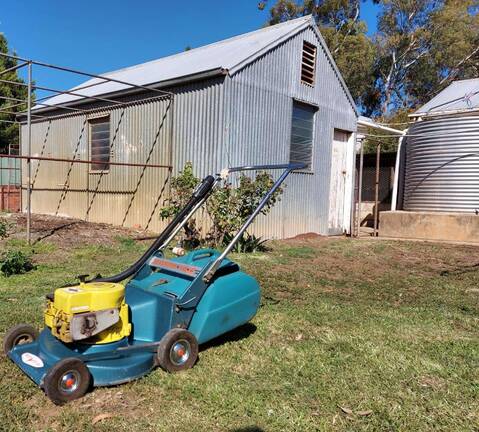
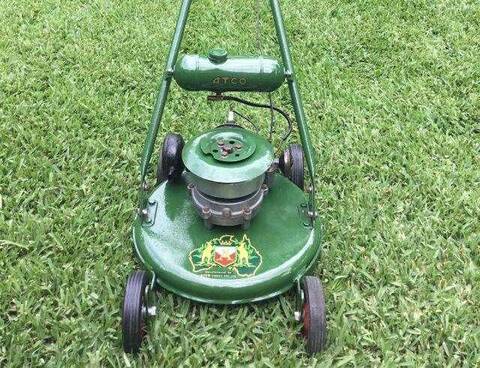
The Mark 10 has a keyway, Bruce? That is a huge step forward from the 1948-style Villiers 2-stroke I had on an old ATCO, which had to be timed the hard way, as I described.
Yes with the old 2/stroke Villiers they were not easy to set the TDC because the flywheel was on a tapered shaft, so you had to watch how you did it up.
They were the good old days where people like yourself needed the knowledge behind them to be able to repair. These days a lot of the knowledge has gone but thanks to people like yourself on the forum it is living proof that people are still about to help others.
Regards,
Bruce
Please do not PM me asking for support. Post on the forums as it helps all members not just the individual.
Hi guys,thanks for your replies.my mk10 is a 4-stroke and has no keyway i did subscribe to the manuals (by mistake 3 times)so i will look into it tonight...ken
Bruce, the antique cars (say pre-first world war)usually didn't have workshop manuals and people had to understand them to maintain them. I have been known to spend half a day shim-adjusting the four engine mounting points on one of those cars to align the engine properly with the gearbox, which was separately mounted to the chassis on another four points, with the disengaging part of the cone clutch on the intermediate shaft between them. The clutch would only engage and release properly if the alignment between engine and gearbox was very precise. I do not regret the passing of those days even a little bit: can you imagine the cost of getting regular service for a car like that? They were for rich people only.
Engines, including mower engines, have steadily become both cheaper, and easier to maintain. There is a down-side for collectors: they have also become less repairable in a long-term sense. You replace worn parts - or entire engines - instead of repairing them, so when the model is discontinued, it soon becomes impractical to keep an example of it running. For a normal user this is of no importance: the new models keep getting cheaper and prettier, so who needs old ones? However collectors are left with a problem.
hello mower man, the timing for mk10 with no keyway is, set the points gap at 0.012"-0.015". set the piston at 3/16" before top dead centre, rotate the loose flywheel until the points just open then tighten the flywheel nut. regards john.
Voljon, could you clarify one point please: how is the 3/16" measured? If you mean with the piston 3/16" down the bore from its highest point, that will coincide with quite a long distance on the periphery of the flywheel. On the other hand if you mean 3/16" on the flywheel periphery, that will only be a couple of thousandths of an inch down the bore, for the piston.
hello grumpy, the instructions are per the mk10-12 operating instruction manual which says,"the magneto is timed so that the contact breaker points commence to open when the piston is 3/16" below top dead centre". the points opening is governed by an eccentric on the flywheel which is loose during timing. so the piston is set at 3/16"below t.d.c.,the loose flywheel is turned until the points just begins to open and then tightened, which positions the flywheel magnets in the correct position.regards john.
Thanks John, since they say below rather than before TDC, they seem to be talking about the piston's vertical position in the bore, so the timing would be a long, long way before TDC in crankshaft degrees. That is good in terms of getting maximum power from the engine, but causes a risk of kickback on the starting rope if the person pulling it falters a bit as it approaches TDC.
You said the breaker point cam is "loose" during timing. Is it not fixed in relation to the flywheel itself? If it can move relative to the flywheel, it is not possible to use fixed marks on the flywheel for timing, which means you cannot use a timing light. It is nearly 50 years since I had an early Villiers (it was probably made before WW2) but my uncertain recollection is that the cam was rigidly attached to the flywheel. The flywheel mounted on a taper on the crankshaft, with no keyway. Having no timing light at the time, and no idea what the breaker gap should be, it took hours to set the thing up (I bought it with the flywheel detached from the engine).
mower man and grumpy, please forgive my typing error and refer to my original post. the piston must be set 3/16 before tdc.grumpy the boss with cam and taper is a press fit into the flywheel and the flywheel is loose when timing.
If the flywheel is 6" diameter (which is a wild guess - I don't remember what it was) 0.26" on the outside of the flywheel would be 5 degrees before TDC, and 3/16" would be about 3.6 degrees.
Hi guys,i am waiting for the bakerlight plate that sits under the points.while this is happening im going to paint block and head.thanks for the advice john and grumpy,i will take some picks of the fly wheel-points-timming mark(arrow) and post them so we all know what were talking about...ken
The flywheel picture looks about the same as the ancient Villiers 2 stroke on the 12" ATCO I had long ago. Mine did not have a timing mark on the outside. The precise breaker gap you use will most likely cause the actual ignition timing to vary quite a bit from the timing mark. So, you just set the breaker gap, put the piston on TDC, and install the flywheel with the flywheel timing mark 3/16" to the right of the stationary timing mark (so that when rotating clockwise it will fire before TDC, not after TDC)? Sounds like they made it all quite a bit easier in later years.




![[Linked Image]](https://www.outdoorking-forum.com.au/forum/images/members/mower-monsterw.jpg)