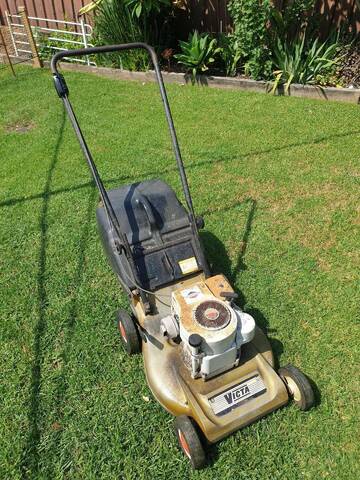
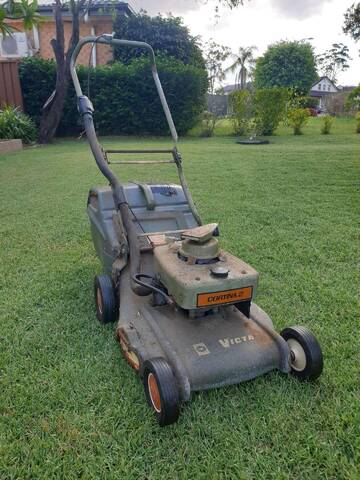
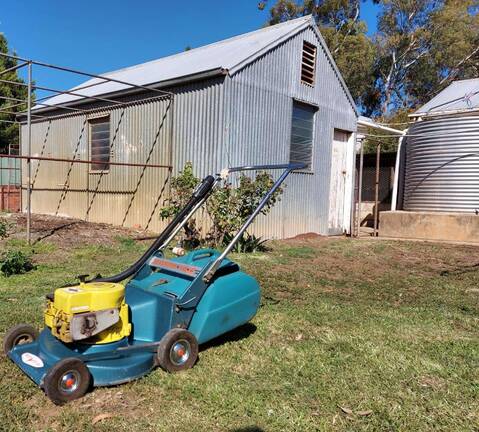
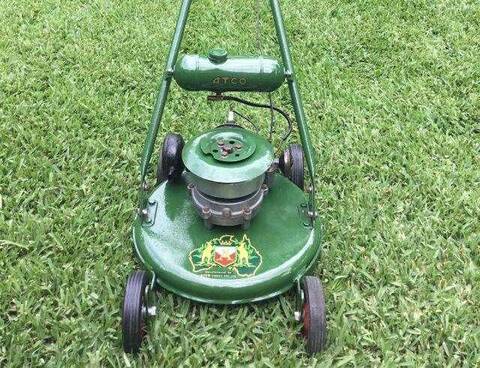
Thank you for posting the pictures, Camerart, they are excellent. Before we get into the tricky stuff, just one question: are you quite certain the points are opening at about 25-30 degrees BTDC, when you rotate the flywheel clockwise, and your electric drill is also rotating the engine in that direction?
The elements required to make the engine go are fuel, spark, and compression. Let's look at those one at a time.
First, fuel. Believe it or not, it is possible to make an air/fuel mixture that is too rich even for a 2 stroke. I suggest you turn off the fuel, drain the float bowl, remove the spark plug, spin the engine with the electric drill for about 5 seconds to expell all the fuel from the crankcase and cylinder (don't extend it much beyond 5 seconds, or it may run out of oil), then stop, put a small spoonful of fuel into the cylinder through the spark plug hole, re-install the spark plug and connect it, then with choke open and a completely dry carburetor float bowl and engine crankcase, spin the engine with the drill and see if it starts and runs briefly, then stops. If it does, your problem is fuel mixture, probably too rich. Tell us, and we can work through the possible specific causes.
Second, ignition. Remove the spark plug, and connect any old spark plug that works to the plug lead, with its gap increased to 0.060". Put a few drops of engine oil into the engine through the spark plug hole, to ensure the rings are lubricated. Clamp the over-gapped spark plug to an exposed metal part of the engine, and spin it up with the electric drill, just for 5 seconds or less. Watch the spark plug gap for what looks like a virtually continuous blue arc. If you get one, substitute the actual spark plug for the dummy one, and repeat the test. If it sparks properly, increase its gap to 0.060", and test again. If all of these tests show good blue spark, chances are the ignition system is OK.
Third, compression. Remove the muffler and take a look at the rings and the side of the piston, through the exhaust port. If possible, photograph what you see. If the rings are stuck or the piston is substantially scored, chances are the engine isn't going to run without new or at least better rings and piston. If you have or can borrow one, apply a compression test gauge to the spark plug hole and spin the engine briefly with the electric drill. Tell us what the pressure gauge reads.
Essentially, it sounds as if you may have been flooding the engine, wetting the spark plug with liquid fuel/oil mix, and thus putting out the fire. However if you go through all three test procedures, we should be able to establish what is going on, whatever it is.