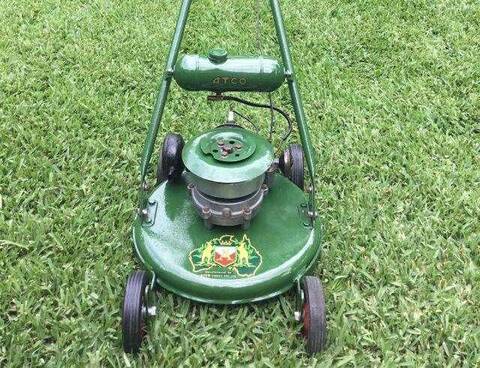
Can anybody please tell me the correct ignition conversion module to use on a vintage 3 HP Briggs engine?
These were the old type of engines they fitted to rotary mowers around 1960-63. They had windup starters and oil bath air filters. The flywheel only has two small magnets that are positioned fairly close together.
As an experiment I tried a 1980s coil with the ignition sensor built in, but it won't work. I did not think it would work, but anyway, it was worth a try just to satisfy my own curiosity. The sensor does not seem to like the smaller magnets. I do get spark but it is very weak and the timing is off. I would prefer not to remove the flywheel and replace it with a later model flywheel just to suit the coil. Instead I would like to know if any of the ignition modules on the market (like Stens, Nova 2 brands) will work if fitted with the original coil?
VM, not sure how old this 3hp motor of yours is but I did 2 early Rover sidethrow slashers a few weeks ago, neither had spark, I just put the later coils on and they worked perfectly. I didn't take any notice of the magnets.
Hi Norm, Yes they will work okay in those engines. Mine is the older type that was fitted to the Rover economy mowers with yellow-green hammertone paint and "Rover" stenciled on the front. I have the same engine on a H.G. Palmer.
The funny thing is the first engine I converted had a broken flywheel, so I replaced it with a later model flywheel with the larger and longer set of magnets. The old coil was basically an oozing green lump of rust, so I binned it and fitted one of the later coils which has the electronic ignition. It started first pull and runs like a champ.
I had my doubts that the same coil would work on the older style of flywheel, mainly because there are just two small magnets. I guess there is a possibility that my ignition coil is faulty, but it tested okay. Tomorrow I might try an ignition coil that I know is good off another engine and see if there is any change.
My hunch at this stage is the more modern coils are only suitable for the flywheels with the larger and longer magnets.
I notice that the OEM ignition conversion kits like Stens, Nova II, and SIG-01 all say they will work on flywheels that have two magnets, and these are often advertized for use on Briggs engines. But before I fork out the dollars, it would be good to know if anyone has got these conversion kits to work on Briggs engines.
I have a more modern flywheel here, so I guess I could just replace the flywheel, but it is a bigger job and some of those old flywheels can be difficult to pull. Sometimes they start to grow there, I'm sure of it!
Sorry VM I haven't tried these ignition modules on the Briggs, I always have plenty of the later coils kicking around. They are great on the full crank 2 strokes, just cut the kill switch wire and connect the module, no need to remove the flywheel and points/condensor, just leave it all there, should be the same with the Briggs coil. I know it is $20 but if you keep fiddling with these old motors you will end up using it because a set of points and condensor would cost that much. https://www.ebay.com.au/itm/Universal-Ignition-Module-Suit-Victa-Briggs-More/302679164835
That works fine on negative ignitions but won't work if the ignition system is positive ground which the old cast iron Briggs ignition systems are. You would need the ignitor version that can be reversed wired if you or others are needing one for positive ground.
Doesn't look like cast iron to me. Looks like plain alloy. How to tell the difference?
In any case I have already stated that it worked fine on the same model engine, but I had to put the new kind of flywheel on too. I will say again, the magnets are a different size and shape on the older flywheels. I guess I will have to take some photos.
Thanks, yeah I had assumed that and tried it after leaving the computer. Magnets will not stick, so it is definitely alloy. I think I was told it was one of the first alloy Briggs engines for rotary mowers.
Here is a photo showing at right the vintage (1960) flywheel with two magnets. The coil for this is big and bulky and has a third central arm instead of just the two outside ones. It requires points and condenser in its original format.
At left is the more modern flywheel (probably late 70s early 80s). Same dimensions and same central taper and keyway. Note that the magnets are much longer and there are in fact three of them in total. The coil for this one is a smaller 2 arm deal which has the electronic ignition molded into it.
As I said previously, the more modern two arm coil will not work with the old flywheel, however if the more modern style of flywheel is installed it will work perfectly. On the one engine I have tried this set up I actually think the engine runs much better than it did before the conversion. It seems to have more "get up and go".
I do still wonder if one of the OEM ignition conversions might work using the original flywheel. In theory I think Stens, Nova II, and SIG-01 should all work well. But as I said before it would be good to know for sure before forking out the dollars for one.
In any case now that I have the two flywheels off, it may in fact be easier to just put the more modern flywheel and coil on it, considering these both came off a junker. I am also not sure if the old three arm coil is still working or kaput. It certainly looks like it has seen better days!
Boy that really old style system. I haven't one since I was a kid. Nowadays here if they are even around would be a great rarity as we here went the economic turn down about 10 yrs ago and everyone got into recycling all the old non-working stuff. A lot things got recycled that only needed minor repairs if was in the hands of a good tech.
I wish I could say with certainty that it can be converted using the original flywheel but I was don't know as I haven't one in my shop to try. About the only you can do is make the coil itself is good and try.It is basically a transformer with a primary and secondary windings. Just note that the secondary lead has a break in it you may get an open circuit reading so you may need probe at coil end of it. It also looks like you have found an alternate way of making things work too.
I do understand the cost issue as I too run what is called a shoe string business. Otherwords I barely have enough spare funds to pay my bills and keep the business open. My biggest expense beside parts is all the new tools you got have for the newer engines.
Just keep us updated on what you decide and if it works.
Turns out the newer flywheel was not very compatible with the old starter crank. The fins on the old flywheels are really robust and can take the punishment. But the newer flywheels have less fins and they are not nearly as strong. I cranked it a few times and next thing there was a terrible cracking sound and I lost half the fins off the flywheel in one go. But I know this set up will work providing you use a cowl with a recoil starter.
So now that I have wrecked that flywheel I am back to square one, unless I can glue the fins back on again. LOL! I will try the original old flywheel again and go ask a local auto tech to test the original coil for me.
It is interesting that the technical sheet for the NOVA II says it will work only on flywheels that have 2 magnets. Well this one has 2 magnets! It also says that you can use it with coils that have 3 armatures. So that will be my next experiment!
Not the problem with the flywheel fins being weak, Briggs have built millions of those motors, it is something you have done or haven't measured correctly.
Not the problem with the flywheel fins being weak, Briggs have built millions of those motors, it is something you have done or haven't measured correctly.
Agree on this as they were probably hitting something.
Originally Posted by vint_mow
So now that I have wrecked that flywheel I am back to square one, unless I can glue the fins back on again. LOL!
Hey I have seen it tried. Doesn't work. That about as bad as that one I seen that was riveted to together. I would not put anything pass some folks. There are those that swear by JB Weld epoxy.
Not the problem with the flywheel fins being weak, Briggs have built millions of those motors, it is something you have done or haven't measured correctly.
Agree on this as they were probably hitting something.
Originally Posted by vint_mow
So now that I have wrecked that flywheel I am back to square one, unless I can glue the fins back on again. LOL!
Hey I have seen it tried. Doesn't work. That about as bad as that one I seen that was riveted to together. I would not put anything pass some folks. There are those that swear by JB Weld epoxy.
Yes Norm it works as a filler but never as some of the indicated thread repairs. I have yet to find anything that work as well as welding, drilling, and tapping.
Now as it may just be my personal experience with the JB Weld that has turn me away from it but I do demand a lot out my repairs.
Obvious jokes are never meant to be taken literally. Of course I was only joking about gluing the fins back on, hence the "LOL". I know it won't work and wouldn't even consider trying it. I might be dumb but am not quite that dumb.
Why do people always assume you have done something wrong when you have not? When retrofitting, I guess we are all doing something "different" and in some people's books that will always be viewed as being "wrong" by default.
Norm, the two flywheels are from an entirely different era. The new ones were not made with rachet winders in mind. Those days had long passed by the time they came on the scene. Look at the photos. You will see one with lots of broad based fins, then a modern one with less fins, less broad based and finer, and with a lot more space between each. The lever prong on the cowl is making contact with the two flywheels in exactly the same place. I measured this perfectly. It works the same. In fact it did work for about 10 spins, then all of a sudden the fins stripped off on one side. I can't explain it any more than you can. All I know is it happened and it does not happen on the old flywheel. The logical conclusion in my mind is that the fins on the more modern flywheels are not compatible with an older rachet wind-up starter.
AVB, I got the coil checked by an auto tech today. He says it is good on both primary and secondary. So now to get an ignition module and give it a try. My past experience with these on Kirby Lauson engines was very poor. The timing was in all cases impaired, to the point that it became impossible to attempt a start without stripping off the keyway and damaging the shaft. I give these ignition module a big thumbs down for use on 60s and 70s Kirby Lauson and Kirby Tecumseh engines. Won't work so don't bother trying. Briggs are similar engines to Techumseh, so I am rather skeptical and cautious. I bet the results will be a dramatic misfire and a broken keyway!
Actually Norm if you look at the flywheel in the image posted the right one already had some impact damaged fins so they might had hairline cracks not seen easily but that is no longer the point now as they have failed for some reason.
Yes vint_mow I understood that you was joking about gluing the fins but there some that read these posts that are just that dumb and would try it. I had fellow that duct tape his bar blade on his walk behind several years ago because he seen it done online in a video. Btw I have seen where they have tried using JB Weld so they could use broken head bolts and use RTV on used head gaskets.
When retro fitting and experimentation there is always possibility of failure but there are times we have no choice if we want an piece of equipment to work again.
With engines being similar doesn't always means thing will works. Take the Honda clones many of the parts will exchange between them and Honda but there are times that they will not exchange too.
When come key ways I only seen broken ones where the tech installed steel keys but I have a few damaged flywheels even when aluminum keys were used. Now I do know where Briggs is using steel keys on older versions of the 280000/310000 series where a design problem requires it. Briggs has since redesign the flywheel and crankshaft so on new design they went back to the aluminum keys. You want these keys to shear so there is no damage to the crankshaft.
When I was growing up I had a fellow that work small engines that just hated Lauson engines with a passion. You probably can imagine some the cussing that we heard coming from his place at times especially when it came those under the flywheel coil setups.
Now I don't do much in the line of repairs of older engines mainly because very few here are willing the spend the time or money repairing them even when we can still get the parts. Or do me like one customer did. Had me to rebuild his engine the had broken a rod where it took me nearly 6 months to run down a NOS rod. He authorized the repair estimate and when I got the engine repaired he refused to pay for the repairs so I am out the cost of the parts and my time. Now I do rebuild engines for myself as it is easier than trying retro fit a modern engine at times. Now of there times that the OEM simply quits making the parts so repairs become nearly impossible unless you can fine donor engines.
AVB I believe it was the left wheel that the fins came off not the right one with the 2 magnets. If you look at the left wheel it already had at least one fin missing and looks like a couple more damaged so there is a possibility that some others had hair line cracks and this may have caused them to be flung off