I am wanting to replace the rope pulley on my Standard with a recoil starter that I have, it's the proper vintage. I thought it was just a matter of removing the existing flywheel nut and fitting the starter cone but the nut in the cone doesn't have a thread all the way through.
Is there a shorter nut that goes on first and then the cone ? Thanks
There are two cone types, one has the nut as part of the cone (cast in) and the thread should go right through. It just screws down over the Tri washer and flyweel.
The second type, which I'm assuming you have, is a cone with a bare hole.
You will need to get the correct nut with a sleeve/shaft. As you screw the nut down, the shaft fits neatly in the cone hole and locks down with the help of a large flat, and curved spring washer.
Possibly your nut is jammed in the hole of the cone and is hindering fitment? An image will tell me if that's the case.
Thanks, I will have another look at them tonight and post up some pics. The standard was partly seized, it had a ring of surface rust at the top of the bore. Just enough to stop it from going over TDC, I have fitted new rings and honed the bore. Thought I would add the starter at the same time. I had to file the 020" ring gap a bit to fit them, even though they were at minimum clearance. Will hopefully run it tomorrow and see how things are.
I checked my starter cups. The early one with fixed nut is threaded on the lower and blank half way up,So that seems normal. It should just screw straight on with the tri cover washer underneath, and be tensioned up. They do not run an aditional washer that im aware of.
Engine sounds ok. A hone as you said should clear the lip and smooth it out. Piston to bore clearance is .008 thou from memory, but they will still run over that. If the bore is round still and you had to take the rings down a smidge, then that should be a nice fit, and I doubt youd encounter any issues.
Im sure you know, but pins to EX side and dont run a lower ring expander if the rings are as tight as you say. Should be a good little runner.
You checked crank was true yes? They are notorious for slipping halves and elongating/trashing the bore.
That's the early cup with the half thread, and definately the correct type for your model.
It will screw straight on once cleaned. Make sure you have your tri cup washer fitted first (The washer that covers the 3 Flywheel puller holes) as this is your tension washer. Then rattle it up.
Yes maybe the thread is crossed or dirty.
Correct tap size is 1/2" BSF 16 or if you don't have a tap, then thread file, or if you have a dummy shaft or crap crank with good thread,put a little Valve grinding paste on the threads and slowly run it over back and forth as you go down, just like a tap.
Good luck, should be no Worries unless your threads are stripped.
If it turns to crap, I have a few if you need:)
As for the crank, the simplest test is to put the rope starter pulley on the engine and turn it...If it wobbles and dips/rises then we know its probably out. Occasionaly the pulley can be out to, but generally its the crank, if the bottom shaft is wobbling too.
Both shafts out of alignment is a slipped crank, A single shaft out of alignment, especially the bottom is usually a bent shaft.
Out of alignment shafts make it really hard to start with a recoil starter.
That's a quick easy way of checking the crank, thanks for the tip.
This might sound a bit dim but I just took the fuel tap off to clean the strainer etc and there was no washer between the brass tap and tank. Both surfaces are spotless and the tap was in the right position ? Should there be a washer ?
In regards to the tap...Wow, that's crazy, usually even with a washer they leak, it should be pouring out!
Naaaa I'm just stiring, couldnt resist. Lols
There are no Dim Questions mate, just Dimwits! Ask any question,and ye shall receive! Lols
The tap simply has a tapered thread, (1/4 BSPT from memory) and does not require a washer.
I would still use thread tape or a thread sealer if you are restoring it. You can't pull the tap out when its on the cowl,so you need to undo all your good work if it leaks. Also some paint doesn't like fuel.
I will be stripping down now to repaint so it's all good. Just wanted to sort the mechanicals out first. First is this one that I rebuilt the bottom end on also got a hone, rings were good. It had a clean up years ago and then got parked in a shed. Fuel tank rusted clear through
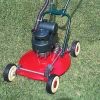
This Standard was seized and got new rings and I fitted the recoil starter
Coool....The 4 seems the better runner:) That was new rings right?
They are a funny engine the 2nd generation, they are supposed to be smoother than the Rotomo, but I can get most of my Rotos to sit almost still, where as a fair few of my previous specials shake like crazy at low speed, no matter what you do to them. They also have a very small throttle margin, maybe only 3 stages, where a Roto has a more subtle and smooth increase of more stages.
I thought my head was gonna rattle off from the first one, lols.
Great job on both engines mate, and you've done well to get them running fairly clean too, and keep the costs down:)
Thanks, yes the 4 has the new rings, the special was running a bit rough and then it started to die out on me ? I opened the throttle wide but it just got worse ? I found the choke had vibrated around to the closed position.
Another early serial. Correct range and Original second gen stamping, Note the lower option code digit is of the later style, so its had a lower case at some point.
Its good to see a few low numbers, as I said previous between 130,000 and 150, there doesn't seem to be very many left, especially in the 130s
Both your 3 and 4 would have been made in the earlier months of 57.
The first model to get the leaf guard was the Auto. It was Std on Auto and option on special. Actually the First Special promo'd by Mervin had no leaf guard.



![[Linked Image from i313.photobucket.com]](http://s313.photobucket.com/user/prc2008/media/20150305_161431_zpskqblrn3b.jpg.html)
![[Linked Image from i313.photobucket.com]](http://s313.photobucket.com/user/prc2008/media/20150305_161425_zpsbqmwbieq.jpg.html)
![[Linked Image from i313.photobucket.com]](http://s313.photobucket.com/user/prc2008/media/20150306_142552_zpst8p9d7qa.jpg.html)
![[Linked Image from i313.photobucket.com]](http://s313.photobucket.com/user/prc2008/media/20150306_142558_zpsvxhhugxd.jpg.html)
![[Linked Image from i313.photobucket.com]](http://s313.photobucket.com/user/prc2008/media/20150306_142511_zpsaavsxsam.jpg.html)
![[Linked Image from i313.photobucket.com]](http://s313.photobucket.com/user/prc2008/media/20150306_142459_zpso8rpiunp.jpg.html)
![[Linked Image from i313.photobucket.com]](http://s313.photobucket.com/user/prc2008/media/20150306_142450_zpsag6decmo.jpg.html)
![[Linked Image]](https://www.outdoorking-forum.com.au/forum/uploads/usergals/2015/03/full-5599-20663-20150305_105513.jpg)
![[Linked Image]](https://www.outdoorking-forum.com.au/forum/uploads/usergals/2015/03/full-8880-20664-image.jpg)