|
1 members (looktall),
4,877
guests, and
606
robots. |
|
Key:
Admin,
Global Mod,
Mod
|
|
|
|
Joined: Jan 2013
Posts: 445 Likes: 1
Qualified Junior
|
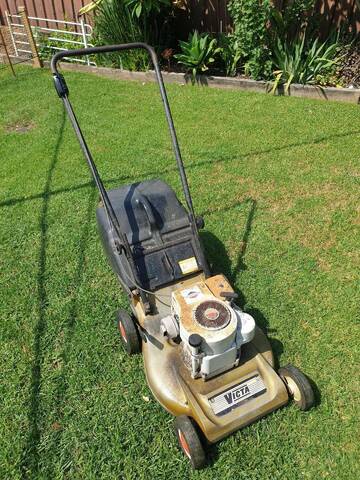
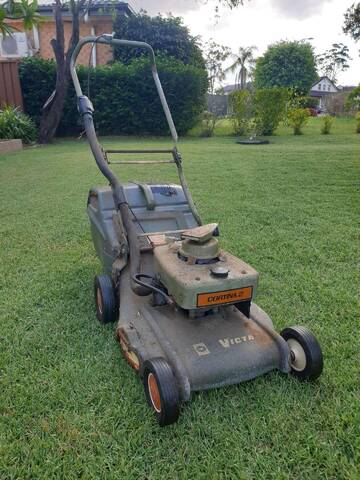
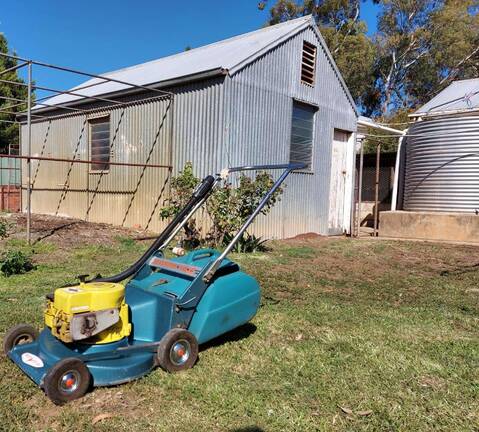
Been tinkering with mowers for a while now but I haven�t come across a Honda that wasn�t completely trashed. My luck changed recently when I picked up this Honda GCV on a Victa Base. ![[Linked Image]](https://www.outdoorking-forum.com.au/forum/uploads/usergals/2014/05/full-6412-16356-img_0788.jpg) ![[Linked Image]](https://www.outdoorking-forum.com.au/forum/uploads/usergals/2014/05/full-6412-16357-img_0789.jpg) ![[Linked Image]](https://www.outdoorking-forum.com.au/forum/uploads/usergals/2014/05/full-6412-16358-img_0790.jpg) I understand it�s not the commercial type engine but nevertheless it�s a Honda and I thought � something new to learn. The closest I have got to a Honda is a Chonda! Well I had to replace the base as the old one was completely stuffed, lucky the victa gear is fairly universal so that was an easy fix. Once the engine was on the base I started work: - Added a new throttle control and cable (adjusted the cable to the choke closes correctly) - New Air Filter - New Spark Plug - Re-gapped the coil - Gave the carby and really good clean (paying close attention to the emulsifier holes we spoke about in the chonda post. The carby is a Khlien and was fairly easy to clean up. The result � A Honda that started first pull and ran really smooth�����however: It is revving too high for my liking when you bring it off choke (it does idle very smooth) I haven�t checked the valve clearance as I haven�t encountered that many overhead valve engines that required the clearance to be adjusted. I have watched some video�s on U-tube and am fairly confident with checking this however I wanted to make sure I did it the right way and used the correct measurements. Thanks Peter
|
|
|
|
|
|
Joe Carroll
Unregistered
|
Commercial honda or not put the H word in a mower ad and they sell flamin quick. As to the govenor question I havent played with one for a while and cannot remember how fast they run at without one infront of me, though from memory they do seem like they are running fast.
I got a victa with that engine brand new once at tiny's $50 it was fresh out of the box, just missing a wheel clip. Sold for $350 the next day, after getting ome.
|
|
|
|
|
Joined: Jan 2009
Posts: 6,926 Likes: 11
Pushrod Honda preferrer
|
Hi Peter. The GCVs are prone to a couple of issues that don't happen to the OHV engines, but when in tune seem to run just about as well, which means very well. Here are the instructions for adjusting the valve clearances: ![[Linked Image]](https://www.outdoorking-forum.com.au/forum/uploads/usergals/2014/05/full-2772-16363-honda_gcv_160_valve_clearance_1.png) ![[Linked Image]](https://www.outdoorking-forum.com.au/forum/uploads/usergals/2014/05/full-2772-16364-honda_gcv160_valve_clearance_2.png) Remember, first, one of the cut-corners on GCV engines is that they don't have gaskets, they use RTV sealant instead. This means you have to be careful removing the valve cover: follow the directions, or you will end up with an old British cocked hat instead of a valve cover. Second, the special tool for adjusting the clearance is an ordinary tool - a Torx bit IIRC, but if not it's a hex key, nothing hard to come by. Third, the valve clearances: Inlet is 0.15 mm plus or minus 0.04, Exhaust is 0.2 mm plus or minus 0.04. Maximum governed speed is 3,100 rpm, plus or minus 150. This is much the same as the GXV engines you are used to. To vary the speed, look at the left hand end of the governor spring. There are a couple of holes it can connect to, giving two different speeds. If you don't have a tachometer to check the speed, try both holes and choose the one that makes it sound more like the chondas you are used to: ![[Linked Image]](https://www.outdoorking-forum.com.au/forum/uploads/usergals/2014/05/full-2772-16365-honda_gcv160_governor_set_up.png) Please let us know if you have any concerns or issues, and we can try to work it out together, as usual.
|
|
|
|
|
Joined: Jan 2013
Posts: 445 Likes: 1
Qualified Junior
|
Thanks Grumpy, I didn�t get a lot of time last night however I did get the valve chest cover off without damaging it. TDC is quite easy as the cam pulley has the alignment marks. I measured the clearances and both valves were greater than .25mm so they will require adjustment. I will complete this process tonight. After adjustment I was just going to clean up the valve chest surface and reseal it with my gasket goo. (see my photo) Will this be sufficient? It worked well when I have rebuilt Full Crank Victa 2 Stroke crank cases. Secondly, I looked for the governor adjustment spring holes and from what I can see it only has one hole. I did a bit more reading about adjusting speed and it all pointed loosening the governor arm and turning the governor shaft clockwise ever so slightly to reduce full speed of the engine. Or I am reading this incorrectly? The way I read your instructions is to turn the governor arm shaft fully clockwise and then tighten up the arm nut. Just wanted to me sure to ensure I don�t damage the engine. Oh and sorry about the quality of the photo�s, my spot light was working overtime and sort of ruined the quality. ![[Linked Image]](https://www.outdoorking-forum.com.au/forum/uploads/usergals/2014/05/full-6412-16377-img_0792.jpg) ![[Linked Image]](https://www.outdoorking-forum.com.au/forum/uploads/usergals/2014/05/full-6412-16378-img_0794.jpg) ![[Linked Image]](https://www.outdoorking-forum.com.au/forum/uploads/usergals/2014/05/full-6412-16379-img_0795.jpg) ![[Linked Image]](https://www.outdoorking-forum.com.au/forum/uploads/usergals/2014/05/full-6412-16380-img_0797.jpg)
|
|
|
|
|
Joined: Jan 2009
Posts: 6,926 Likes: 11
Pushrod Honda preferrer
|
I haven't used that type of goo, so I can't guess whether it will work well. If it is marked silicone RTV (Room Temperature Vulcanising) it is the same stuff Honda uses. Hardening stuff is no good because of thermal expansion. Non-hardening stuff that isn't RTV may or may not be good, but if a reputable brand, will probably be OK, though it may make it harder to get the thing apart in future. Worst case, it will leak, or you'll have trouble getting it apart - neither is especially serious. You adjust the governor arm by loosening the clamp bolt, turning the shaft fully clockwise, pulling the top of the governor arm fully to the right (wide open throttle), and holding both shaft and arm in that position while re-tightening the clamp bolt. Be gentle with the clamp bolt, or you'll ruin the governor arm and it will slip on the shaft afterwards. That is the normal service procedure to ensure the governor is working properly - it will not make a difference to the maximum engine speed unless it is badly set up when you start. However if the valve clearances are up the creek, it sounds as if there has been amateur intervention along the way, so it is best to check everything and set it properly. Usually though, if the engine idles at the correct speed, any misadjustment of the governor arm on the shaft will reduce the maximum speed, not increase it. The quickest and tidiest way to check governor speed is with a tachometer. I use one of these - it isn't notably good, but it gets the job done, in a fashion: http://www.ebay.com.au/itm/Spark-Pl..._DefaultDomain_0&hash=item2a3c5ccb94The main weakness of this device is that it only reads in increments of 40 RPM, and that makes it a bit awkward to use it for adjusting idle mixture. It also has a built in battery that will go flat in a few years, and in theory it isn't replaceable. I'll test that theory when the time comes, of course.
|
|
|
|
|
Joined: Jan 2013
Posts: 445 Likes: 1
Qualified Junior
|
Point taken about the sealant. It was non hardening so I gave it a go and it appears to have sealed ok.
I adjusted the valves which was a fairly simple process. The pull rope now extends out much smoother.
The governor arm appeared to be set correctly after following your instructions. I am confident this will not require any further adjustment.
I will invest in the tacho. I think it is a more than worthwhile investment.
On a separate note, I was thinking the over-reving might be too do with the way I installed the throttle however when the throttle arm is in the choke position the butterfly is closed (exactly how it should be) and when you move the throttle arm up say a � it goes off choke. Could I have missed something in this area which is contributing to the over �reving?
I also noted earlier that multiple holes for the governor spring were not included on my model so I was unable to make the adjustment you mentioned.
Tonight I will give it a run and see how it goes, until then I�ll await your comments.
|
|
|
|
|
Joined: Jan 2009
Posts: 6,926 Likes: 11
Pushrod Honda preferrer
|
Using a tachometer is the only way to tell for sure if the maximum speed is correct. However the maximum speed should be the same as for an OHV Honda or chonda, and it should sound much the same as the Honda, and somewhat quieter than the chonda (chonda mufflers don't seem to work as well as Honda ones, at least to me).
It sounds as if the decompressor probably wasn't working with the huge exhaust valve clearance you had, and now that you've corrected the fault it is working properly. The starter will last longer on part compression.
The choke should just barely close fully, when the speed control is at maximum/choke. Try backing off the speed lever a little, and see if the choke opens with the smallest movement of the lever. If it doesn't, an adjustment is needed. I'm used to the OHV engines, which have a screw-stop on the governor plate to control how far the lever can move. I screw it in until the choke doesn't quite close, then back it off until it just barely closes. I don't recall what equivalent adjustment the OHC engines have. If the speed control can move too far, it may close the choke then move further by distorting the linkage. Movement of the speed control lever stretches the governor spring further, increasing the maximum speed, so you have to set up the linkage so the choke just barely closes when the speed control lever is pushed as far as possible.
|
|
|
|
|
Joined: Jan 2013
Posts: 445 Likes: 1
Qualified Junior
|
I have purchased the tacho so it will come in handy for future jobs even if it does have a battery that can�t be replaced.
You were spot on about backing off the throttle cable ever so slightly. It does actually make quite a significant difference to the engine speed. Your point about the throttle butterfly only partially closing is very important. I originally had the throttle butterfly set to be fully closed when in the choke position. Now it is in the position of �barely closed� or �partially open�. It still however starts at first pull.
The OHC/ Valve Cover sealed up really well with no noticeable leaks. I let it cure for 24 hours before starting the engine just to be sure it was set correctly. I did end up buying some RTV sealant for future jobs but my existing Permatex appears to have performed well.
I ran the mower for a few minutes in the shed last night and full speed sounds sweet and the idle is very smooth and quiet. You don�t hear that occasional side valve engine misfire like the Briggs Side engines.
If there is anything else you think I should check let me know and I will take care of it.
I will take the mower out for a good run on the weekend and let you know how it goes. I am actually pretty confident it will all go well.
|
|
|
|
|
Joined: Jan 2009
Posts: 6,926 Likes: 11
Pushrod Honda preferrer
|
It sounds as if you have it sorted, Peter. Just one thing about the choke adjustment. My procedure is to put the handlebar lever in the choke position, then feel the choke butterfly's lever with a fingertip to see if it will move even slightly further. If it will, I repeat the adjustment until it just won't. The reason I do that is, I've found that the GXV120 engines in particular, especially when they have new piston rings, will not always start first pull in winter. No problem in summer, it is always first pull. However in winter it is usually two pulls even with the choke closing perfectly. I've found that with 3 different engines. The odd thing is that my GXV140 will always start first pull, summer, winter, or winter after sitting unused for 6 months. To be fair, the GXV140 is about two thirds of the way through wearing out its rings, and I haven't tried a GXV140 with new rings. That would slow down the pull start, and might make the difference.
|
|
|
|
|
Joined: Jan 2013
Posts: 445 Likes: 1
Qualified Junior
|
Hi Grumpy, Sorry for the slow reply. I have been away with work in the Torres Straight. Really busy and no time for mowers! The mower usually starts on the first of second pull at worst from dead cold. I tried to seal the valve cover with the permatex and it didnt work, it leaked quite badly. I then went and bought some of the sealant you mentioned (I bought the selley's brand) as they had it at Supercheap and it worked perfectly. No leaks at all. I took the mower for a good run today and mowed down some long grass for a good 20 minutes or so and it didn�t miss a beat. It is reving nicely and sounds really sweet just like the chondas I am used too. I have included some photos of the finished product after a wash. Thanks for all your help as usual, its been a good learning experience. ![[Linked Image]](https://www.outdoorking-forum.com.au/forum/uploads/usergals/2014/05/full-6412-16508-img_1371.jpg) ![[Linked Image]](https://www.outdoorking-forum.com.au/forum/uploads/usergals/2014/05/full-6412-16509-img_1372.jpg) ![[Linked Image]](https://www.outdoorking-forum.com.au/forum/uploads/usergals/2014/05/full-6412-16510-img_1373.jpg)
|
|
|
|
|
Joined: Jan 2009
Posts: 6,926 Likes: 11
Pushrod Honda preferrer
|
Thanks for reporting back, Peter, a thread without a conclusion doesn't help people nearly as much as one that demonstrates a solution.
The OHC Hondas are "residential", not "commercial" like the OHV ones, but I think they generally run about as well for their perhaps shorter and less trouble-free lives. The performance you have described sounds like what I would expect, and what I am accustomed to getting from OHV ones.
The chondas seem to have a couple of small design weaknesses that are rather easily fixed if they give trouble (and I think most of them don't give trouble). The fix typically consists of replacing the inferior component with a genuine Honda one, which in most cases fits perfectly. I've seen worn out parts from chondas that were properly made to full OHV Honda specifications, but were very, very severely worn. This is from engines that did not show signs of abuse, which suggests the chonda engines they came from lasted just as remarkably long as OHV Hondas typically can. Of course I've seen reports here of other chondas that had serious early problems due to those few inferior components giving trouble - and which were restored to excellence by fitting a Honda part in place of the defective one.
If your purpose is residential, and you watch for the problems that sometimes occur with OHC Hondas (e.g. jumped timing, exhaust valve guide moved out of position, and oil leaks from governor paddle shaft) you are likely to be well satisfied by a very smooth, easy-starting and efficient engine.
|
|
|
|
Forums144
Topics12,758
Posts106,813
Members18,156
| |
Most Online40,124
Apr 13th, 2026
|
|
|
|