|
0 members (),
811
guests, and
1,767
robots. |
|
Key:
Admin,
Global Mod,
Mod
|
|
|
|
|
|
KenCat
by KenCat - 21/07/26 03:42 PM
|
|
|
|
|
|
|
|
|
|
|
|
|
|
KenCat
by NormK - 21/07/26 06:57 PM
|
|
|
|
|
|
|
|
|
|
|
|
Joined: May 2011
Posts: 2,738 Likes: 6
Forum Historian
|
Hi, just a general enquiry at this point.
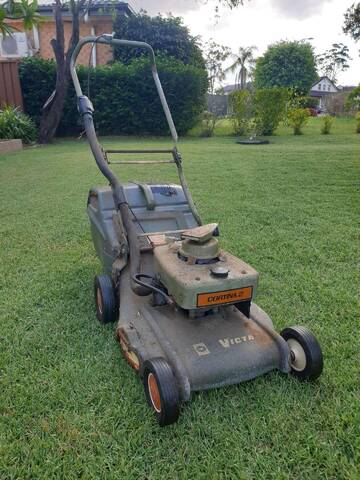
Up until now I have kept myself tied to the Victa 2-stroke engine, however I am starting to take interest in expanding my hobby, I will soon be taking delivery of two (at least) mowers with Briggs 4-strokes, as a general guide (I will be able to be more specific once I have the engine numbers handy) what are relatively common things to consider when choosing a viable project with these engines, and what might be some common faults.
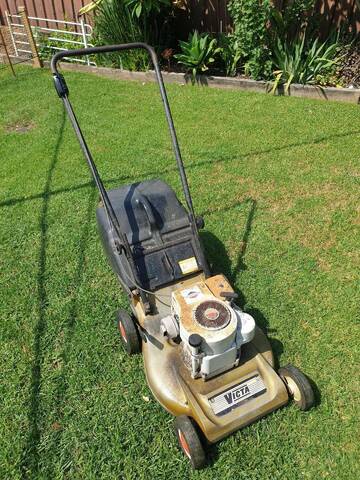
At this point I know; mower one has a white brigs engine, with the old 'Straight up' pull starter, and the spinning metal vent on top, it is on a brown Jupiter Jester base. Mower 2 has a red brigs engine of the same description I believe, but I have not had as good a look at this one.
Again, once I have them I will be able to be more specific, at this point I am just wondering what I may be up for with these two (freebies) and what might be good things to know when choosing them, before I spend any money on a brigs that is not worth the trouble.
Cheers
Ty
____________________________
Please do not PM me asking for support. Please post your questions in the appropriate forums, as the replies it may receive may help all members, not just the individual member.
|
|
|
|
|
Joined: Jan 2009
Posts: 6,926 Likes: 11
Pushrod Honda preferrer
|
The white one may be very old - my white Briggs was made in 1976, and soon afterward they seem to have turned orange. It is probably a 92908 - you can find out by reading the numbers stamped on the air cowl. The model (92908) is the first of three blocks of numbers, the second is the type (obscure topic) and the third is the code. The first two digits of the code are the year of manufacture. Briggs engines from before 1982 have breaker points. This is not much of a source of trouble, but eventually the ignition cam follower wears the crankcase resulting in oil entering the points can inside the flywheel, and shorting the points. If a new cam follower doesn't tighten it up, this requires reaming and bushing the crankcase, so it isn't really worth bothering with - it only takes a couple of minutes to fit the electronic ignition from post-1982 engines. The 92908 in particular has an automatic choke, which is excellent when working properly and is normally easy to service, but if it has been butchered it may be a problem. Also, some of the later 92908 and 92508 engines had plastic (Minion) carburetors which work until they deform, and then are a problem. The vertical pull starter is excellent - pretty much lasts forever and is easier to use than the radial pull type used on all Briggs horizonal crankshaft engines, and the later Briggs vertical crankshaft engines. 92908s with breaker points have an oil level plug, not a dipstick, and this is not as easy to use as the dipstick. Generally, I consider it one of Briggs' best small engines: easy to start, nice to use, reliable and durable. Like all of the small Briggs engines since about 1970 it has an aluminium bore, of course. There is excellent overhaul information on that engine and many others available in the old Briggs overhaul manual, accessible free on the internet. I don't recognise the red engine you've described, but if it has the vertical pull starter it is probably 1980s. I'd need the model number to be more specific.
|
|
|
|
|
Joined: May 2011
Posts: 2,738 Likes: 6
Forum Historian
|
Thanks for that grumpy, if i indeed have the engine your referring to, sounds like i pick a worthwhile introduction to the Briggs engines. i will be picking the mowers up this weekend, and will let you know more once i have those engine codes, and what i can determine about the state of them.
Cheers
Ty
____________________________
Please do not PM me asking for support. Please post your questions in the appropriate forums, as the replies it may receive may help all members, not just the individual member.
|
|
|
|
|
Joined: Oct 2010
Posts: 1,819 Likes: 6
Junior Technician
|
Ok after doing the same, fixing 2 strokes, then moving on to 4 strokes due to demand from the uneducated ive got a few tips i can pass on.
First up, grumpys trick for starting them. Invaluable. You wont see me publish it but its a bit of info i pass on to anyone who buys one off me.
Second bit of info is the same as a 2 stoke, no ethanol ever.
Third bit, every time before you start it (or start looking at a potential new purchase/new arrival to fix) check the oil. The time you dont check it is the time you blow it up because its got no oil in it.
Another good tip, is check underneath, the shaft about the disc for string etc, before chainging the oil nothing like $5 worth of new oil all over the top of the blade plate to make a mess and take the profit out of it.
Checking for oil before you do anything to it will tell you if its had love and if theres been a chance its been run dry. If it has, the con rod could be stretched if its not completely broken.
Head to a truck parts joint and lay down the $60 on a 20L drum of shock treatment degreaser.
Wash the sucker.
Then pull the cover off (starter first if its a side start), i put a blocked off snorkel adapter on the carb, and wash the sucker again.
First thing i do is remove the head. Check the bore. Check the valve clearances. If they are no good and the bore is OK, reset them and put it back together. If its no good, throw it.
Check for spark. If its no good, flywheel off and check points if its got em. Its easy to tell, theres two wires go in under the flywheel. If you cant fiddle them back to life, put on an electronic coil. Electronic coil just has the wire from the coil to the kill switch.
While the fuel tank is off (easier to just take it off while removing the head), check the fuel. If its bad pour it out and check for water in the bottom of the tank. If its got some you will have to leave it air dry, or cook it.
Try starting it. Air cleaner off. Some carbs need the air cleaner hold down screw to be in the hole or they wont work right. Cant remember whats what so i just leave em in everything.
If it starts its all good. If it doesnt try a bit of fuel down the carb. do it a few times. If it fires then dies out and just keeps doing that and the mixture screw is not set way out you will have to lift the carb of and check the diaphragm. Sometimes they stick, sometimes they are stuffed.
Thats about it.
Bob.
|
|
|
|
|
Joined: May 2011
Posts: 2,738 Likes: 6
Forum Historian
|
Thanks for that, i will give some of these a go when the mowers arrive, and i will let you know how they go.
Where would i find Grumpy's trick for starting them?
Cheers
Ty
____________________________
Please do not PM me asking for support. Please post your questions in the appropriate forums, as the replies it may receive may help all members, not just the individual member.
|
|
|
|
|
Joined: Jan 2009
Posts: 6,926 Likes: 11
Pushrod Honda preferrer
|
It's in the archives, and I didn't invent it anyway. It applies to B&S engines with the Pulsa-Jet carburetor, which essentially means those with a 2 or a 9 as the third group in the model number. The first one or two digits are the capacity in cubic inches, the next digit is the basic design series, and the one after that tells you about the crankshaft, carburetor and governor. If the number is a 2, it means horizontal crankshaft and Pulsa-Jet carburetor. If it is a 9, it means vertical crankshaft and Pulsa-Jet. The Pulsa-Jet was the premium carburetor for the small and medium-sized engines in the third basic design series (first series was 0, second was 1, third was 2). So, the classic Briggs engines up to say 250 cc of the 70s and 80s had either Pulsa-Jet or Vacu-Jet carburetors, the Pulsa being the more desirable one. Here is a basic diagram of how the Pulsa worked: ![[Linked Image]](https://www.outdoorking-forum.com.au/forum/uploads/usergals/2011/05/full-2772-1125-bs_pulsajet_carburetor.jpg) The carburetor is on top, the fuel tank below. The Pulsa used a two stage fuel pumping process, to ensure constant air/fuel ratio. The left hand vertical tube dropping from the carburetor sucked up fuel and pumped it into the small chamber in the top of the fuel tank, on the right side of the diagram. The pump had much more capacity than necessary so the small tank was always full. The right hand vertical tube, connected to the carburetor venturi, drew fuel up through the jet and it was discharged into the intake air stream. When the mower has been standing for days, weeks or months, chances are the small chamber will not be completely full. The mower will always start first pull, though, if it is full, so to make it start immediately, we need to fill that chamber. We can easily do that for a push mower by tilting the mower toward the cylinder head (which means tipping it toward the small chamber, but you can't see that when you look at the mower). Fuel then runs under gravity up the left hand tube, through the diaphragm pump, into the small chamber. Result: instant start. In practice, the same tilting process is likely to help to some extent with the Vacu-Jet and some other carburetors, just because it makes fuel run up into the venturi and prime the engine. This secret starting technique is sometimes practised by overhaulers and sellers of Briggs mowers: nothing impresses the customer as much as an instant start from a demonstrably cold engine, without priming or other visible interventions - the tilt trick can be done hours ahead of time. (Mind you, much the same thing could be achieved with a bulb-primed engine just by priming it before the customer arrived, but that only works if you know which mower he or she will want demonstrated. Frequent priming of mowers that are not subsequently started will flood them and keep them from starting.)
|
|
|
|
|
Joined: May 2011
Posts: 2,738 Likes: 6
Forum Historian
|
Thankyou, this will make assesment alot easier!
Cheers
Ty
____________________________
Please do not PM me asking for support. Please post your questions in the appropriate forums, as the replies it may receive may help all members, not just the individual member.
|
|
|
|
|
Joined: May 2011
Posts: 2,738 Likes: 6
Forum Historian
|
I will be able to put up the numbers tonight, as the mowers arrived late last night.
A few quick updates:
1) i was able to find out the first 2 digits of the last block of numbers for eah one, one is 81 or 82, the other is a definite 80.
2) the White engine, is not white, turns out they thought i meant the sticker, the engine itself is black, this is the 1980 one.
3) Both are indeed vertical starter.
4) there are some more comming, this may include a large squrare top brigs (Newer, quantum i beleive) and a blue rover, with a silver brigs engine, this one is 77 or 79 for the first 2 of the last set, and has a crank top recoil starter (odly enough, that points forward so you need to stand infront of the mower to start it) and another rover with a Techumseh (Looks reasonabley new, its marked 3.5)
I should be able to get those full numbers up tonight or tomorrow.
Cheers
Ty
____________________________
Please do not PM me asking for support. Please post your questions in the appropriate forums, as the replies it may receive may help all members, not just the individual member.
|
|
|
|
|
Joined: Jan 2009
Posts: 6,926 Likes: 11
Pushrod Honda preferrer
|
We'll have to identify them from the model numbers, when you've got those. The 1981 and before will have breaker points, while the 1982 onwards will have Magnetron (breakerless) ignition. With regard to which way the starter cord comes out, my 1976 Victa/Briggs not only has the engine oriented so the vertical starter is at the front, it also has a big sticker on the top-front of the base, saying "Put your foot here, stupid" or words to that effect. Some of the very old mowers (Turner was an example, as I recall) used to have a cast-on grid there, probably for the same reason.
The Tecumseh may be one of the late type with model number beginning with LAV (Light Aluminium Vertical), which seems to be held in low regard by those who've worked on them. I've never done so myself, and am fairly pleased about that. The good news is there is a full workshop manual for those engines in the parts and manuals section of this site. The bad news is that Tecumseh went belly-up a few years ago and the availability of parts is becoming patchy.
|
|
|
|
|
Joined: May 2011
Posts: 2,738 Likes: 6
Forum Historian
|
|
Cheers
Ty
____________________________
Please do not PM me asking for support. Please post your questions in the appropriate forums, as the replies it may receive may help all members, not just the individual member.
|
|
|
|
|
Joined: Jan 2009
Posts: 6,926 Likes: 11
Pushrod Honda preferrer
|
A 92905 is a 9 cubic inch (148 cc), third generation design, with a vertical Pulsa-Jet carburetor and plain main bearings: all is well so far, it is one of my favourite engines with my favourite vacuum-type carburetor. However the final 5 means it has a 12 Volt electric starter only, no recoil starter. With the vertical pull starter shown in your photo it would be a 92908. With its manufacture date of 13 June 1980, it will have breaker points inside the flywheel. It should have the automatic choke, which makes it the easiest to use and sweetest running of the small Briggs engines in my opinion. Personally I prefer a snorkel air cleaner, but the foam type you have is more common.
|
|
|
|
|
|
Joe Carroll
Unregistered
|
I had the identical engine on an identical mower, I still have the engine but it looks nothing like that, the cowlings, starter, ignition were all trash so I installed everything from a 2005 model briggs. Only thing I dont like is there is no dip stick.
|
|
|
|
|
Joined: Jan 2009
Posts: 6,926 Likes: 11
Pushrod Honda preferrer
|
I have a 1982 one and it has a dipstick, Joe, so that may be about when they made the change (much the same time as when they switched to Magnetron ignition). My 1982 one happens to be a 92508 though (Vacu-Jet carburetor instead of Pulsa-Jet), and by 1982 they had reduced the maximum governed speed of the vertical crankshaft engines to 3,000 rpm from 3,500.
I agree the dipstick is a better setup than the level plug on that engine. On some of the others the dipstick reached up so far it became a bit flimsy and vulnerable, but on the 92000 engines it was properly braced and just a better way to check the oil.
|
|
|
|
|
Joined: May 2011
Posts: 2,738 Likes: 6
Forum Historian
|
When i went an had a look at it today, yep, 92908, It needs oil i beleve, and if i can get this one going its on the keep list, how do i make sure the oil level is right?
The other one (i did not manage to note it all down) is a 1981 model 93508, and this one has the dipstick (also the remnants of a gauge built into the fuel cap)
i also picked up a 100708 (1989 i think) and one i cant identify as the mower came without engine cowl (it there another way to tell?) nor a tank, muffler or carby.
i forgot that i also have a victa charger with one of the sprints on it i believe, but its buried under other mowers, and not a priority, so i don't know the numbers for it.
I'm pretty sure i want to make the Masport my first project, so i will start work on it, and let you know how i go.
Cheers
Ty
____________________________
Please do not PM me asking for support. Please post your questions in the appropriate forums, as the replies it may receive may help all members, not just the individual member.
|
|
|
|
|
Joined: Jan 2009
Posts: 6,926 Likes: 11
Pushrod Honda preferrer
|
With the level-plug Briggs you are supposed to park it on level ground and fill with suitable (SAE30, not multigrade) oil to the top of the thread that retains the level plug - in other words, fill until you can't put any more in. For some reason my 92908 does not cooperate with that approach: if I fill to that level and leave it parked in the shed (level concrete) it expels oil through the plug-to-crankcase joint onto the floor. If I fill to the bottom of the thread I have no problems, so that is what I do.
Your 93508 will have a Vacu-Jet carburetor. I don't know if that fourth design generation still had the automatic choke. The Vacu-Jet was a cheaper carburetor than the Pulsa-Jet, with no fuel pump. It just relied on venturi suction to pull fuel up from the fuel tank through the jet to the venturi. As a result, air fuel ratio depended on fuel level in the tank, and they tended to be slightly harder to start (especially with low fuel level). Nevertheless my 92508 is a nice engine, starts quite easily, and once running is quite satisfactory. Your fuel-gauge-in-the-cap sounds like a fourth generation feature - I don't know what else was different.
Identifying a small vertical Briggs without cowl or carburetor sounds difficult, but there are Outdoorking members who know way more about this than I do. If you post a picture of the engine, there is a good chance someone will be able to help.
Your Masport/92908 project sounds like one that will interest members. Please post pictures and reports. I'll leave this thread open.
|
|
|
|
|
Joined: May 2011
Posts: 2,738 Likes: 6
Forum Historian
|
No worries, I'll be starting it tomorrow, i have the Gregory's book for it, so i will follow that guide, and give the engine a throughout check and clean out to restore.
Cheers
Ty
____________________________
Please do not PM me asking for support. Please post your questions in the appropriate forums, as the replies it may receive may help all members, not just the individual member.
|
|
|
|
|
Joined: Jan 2009
Posts: 6,926 Likes: 11
Pushrod Honda preferrer
|
|
|
|
|
|
|
Joined: May 2011
Posts: 2,738 Likes: 6
Forum Historian
|
Thanks for that Grumpy, i have begun the job, and i will post the deatisl & photos in a new thread, so far to sum up, i have de-carbed the head, valves, seats & piston, cleaned over the engine, flushed the tanks, and done a complete peice by peice rebulid of the carburettor.
I need to wait on a new head gasket, lower oil seal, and crank case gasket, in the meantime i will be doing the carburettor for the 93508.
Cheers
Ty
____________________________
Please do not PM me asking for support. Please post your questions in the appropriate forums, as the replies it may receive may help all members, not just the individual member.
|
|
|
|
|
Joined: Jan 2009
Posts: 6,926 Likes: 11
Pushrod Honda preferrer
|
Thank you for that update. Since you will be using a new thread for your reports on those overhauls, I'll close this one.
|
|
|
|
M |
T |
W |
T |
F |
S |
S |
|
|
|
|
|
|
1
|
2
|
|
3
|
4
|
5
|
6
|
7
|
8
|
9
|
|
10
|
11
|
12
|
13
|
14
|
15
|
16
|
|
17
|
18
|
19
|
20
|
21
|
22
|
23
|
|
24
|
25
|
26
|
27
|
28
|
29
|
30
|
|
31
|
|
|
|
|
|
|
|
|
Forums144
Topics12,746
Posts106,765
Members18,062
| |
Most Online40,124
Apr 13th, 2026
|
|
|
|





![[Linked Image]](https://www.outdoorking-forum.com.au/forum/uploads/usergals/2011/05/full-5013-1166-26052011004.jpg)
![[Linked Image]](https://www.outdoorking-forum.com.au/forum/uploads/usergals/2011/05/full-5013-1167-26052011006.jpg)
![[Linked Image]](https://www.outdoorking-forum.com.au/forum/uploads/usergals/2011/05/full-5013-1168-26052011005.jpg)
![[Linked Image]](https://www.outdoorking-forum.com.au/forum/uploads/usergals/2011/05/full-5013-1169-26052011007.jpg)
![[Linked Image]](https://www.outdoorking-forum.com.au/forum/uploads/usergals/2011/05/full-5013-1170-26052011008.jpg)
![[Linked Image]](https://www.outdoorking-forum.com.au/forum/uploads/usergals/2011/05/full-5013-1171-26052011009.jpg)
![[Linked Image]](https://www.outdoorking-forum.com.au/forum/uploads/usergals/2011/05/full-5013-1172-26052011010.jpg)
![[Linked Image]](https://www.outdoorking-forum.com.au/forum/uploads/usergals/2011/05/full-5013-1173-26052011029.jpg)