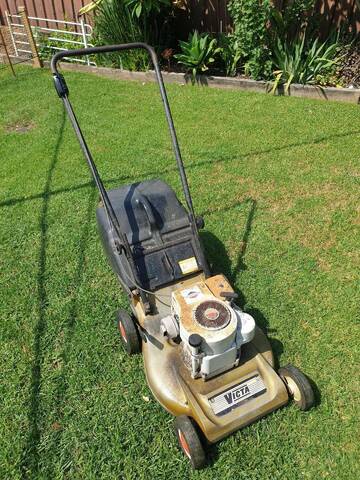
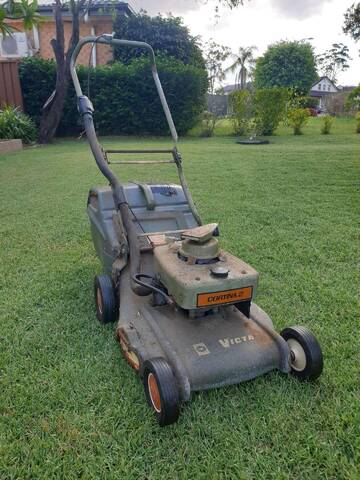
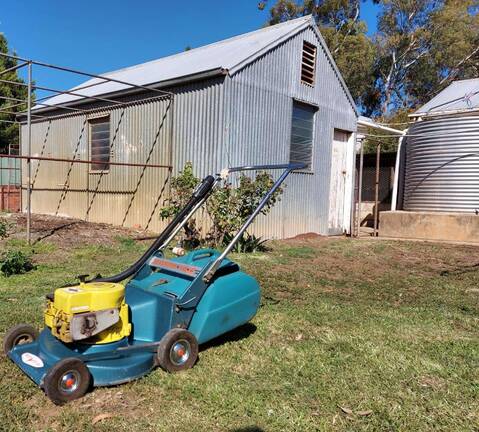
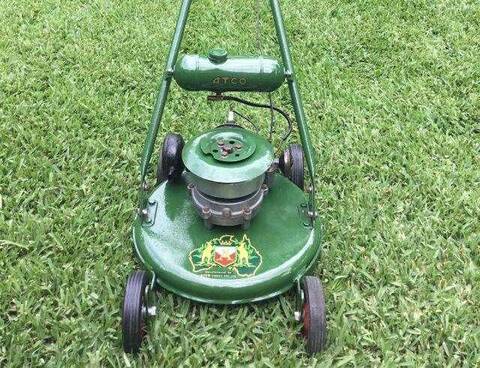
I do find it funny that in trying to make an efficient catching mower, they made one with the ability to make really good mulch
Hi
TylerI do want to say something here.
When I said that the design had a mulching function I mean that the design
would have delivered
some mulching of grass. It could never be a mulcher
mower - as we know them - and also have a catcher.
Mulching mowers work by re-cutting grass leaves into increasingly finer cuts.
A mulching mower requires three things: a skirted base, no chute (or a plugged
chute), and fluted blades or blade bar design.
The use of any partial enclosure in the form of a mower with a skirt
would deliver
some mulching (as a partial enclosure). Re-cut clipping were
lighter, and therefore more easily 'caught' by the catcher.
The Victa VC mowers of 1970 were introduced with unprecedented fanfare.
But what was the secret - of high-arch mowers over mid-arch jobs?
The answer - not a lot.
My understanding is that the high arches restricted the flow. So, just like a
garden hose, restricted flow increases velocity. More mulching, lighter
clippings, higher velocity for catching.
The main claims of the high arch spiels was that they were more efficient at
cutting wet grasses. Fair enough ... but what about higher flutes on blades
on mid-arch designs?
Conclusion: advertising puffery.