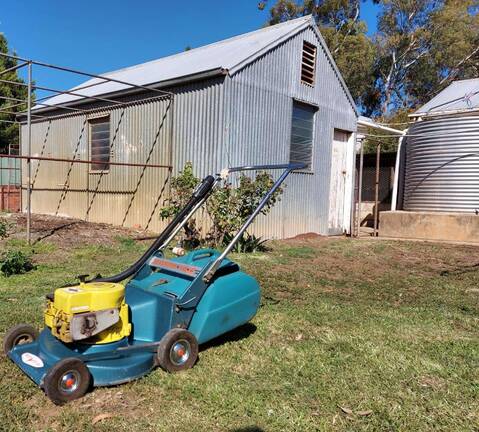
If they allow things like increased capacity, they most likely allow modified camshafts and oversized inlet valves Joe, and I think you could probably have gone a lot further with the compression ratio increase. I did it with a car engine when I was a kid, and to get to 8:6 to one I had to go to a nominal 0.025" clearance over the piston, to cover carbon accumulation on both the head and the top of the piston. (That was about the thickness of the head gasket, in other words). You could run a higher compression ratio than that as far as the fuel is concerned (it was still 98 octane leaded at the time) but unfortunately you can't get it with side-valve geometry, you run out of places to put the valves when they are open.
Quite a lot can be done with camshaft modification. You have to grind down the base circle of the cams, then grind away the top of the lobes to return to the same valve lift. The outcome is considerably more duration of the open periods. You have to polish the lobes very carefully then get them flash-chromed in most cases because you've ground away the hardened surface. The result can be a bigger power increase than you get from the compression ratio increase, but to go that far you have to destroy the low speed torque, and have quite a high idle speed.
I haven't seen the detail of the modifications you make to the oil slinger and the sides of the rod to get the original rod to go to 6,000 rpm and live, at least for perhaps a minute or so, but if the racing guys are telling the truth they are achieving it. Keeping the piston weight down is crucial though, since overspeeded rods normally fail in tension and the tensile load is caused by the weight of the piston and the rod itself. My old car engine had pressure lubrication and despite the very spindly rods it had, reached 6,500 rpm several times for brief moments. Each time it did that it left chatter marks on the head where the bouncing valves had been hitting it.