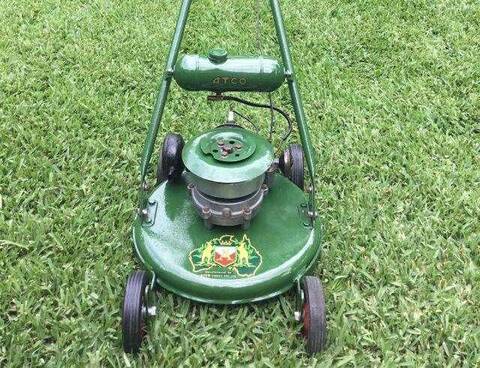
If you are trying to produce a reasonably powerful small engine at low cost, any side-valve model is an odd choice. They inherently have low efficiency and low horsepower per litre, and with the best possible modifications will lag well behind a modestly tuned overhead valve engine. In most cases an overhead camshaft engine will do even better because it can achieve higher speeds.
If you particularly want to work on a side valve engine for some reason (for example, because the racing formula you intend to race under requires it) then some things can be done, and they may go further than Joe's example did, but notice that Joe's engine had to have its awful aluminium connecting rod replaced in order to operate at higher crankshaft speeds. A billet con rod (that is, one milled out of a solid billet of metal, normally structural steel) is a very expensive item. If your rules just require you to use a lawnmower engine, you could get a great deal more power by using, say, a Kawasaki or Suzuki 2-stroke engine as the starting point. If it has to be a 4 stroke, an OHV or OHC Honda seems a lot more promising as a starting point than a side valve engine of any kind.
If you insist on using a side valve engine, and want to make it as cheaply as possible from common parts, a B&S is quite a good starting point since the parts are commonplace. The main problems you have to address then are poor breathing, low compression ratio, and weak connecting rod. You can improve the breathing somewhat by eliminating the air filter and muffler, and increasing the size of the intake port and intake valve. The larger valve will require machining work, to fit the valve and valve seat from a larger Briggs engine. The camshaft lobes will need to be altered to increase the duration of lift of both intake and exhaust valves. This can be done by hand with great difficulty, or by a hot-rod shop more easily. The compression ratio on side valve engines used to be maximized (about 8.5:1 is as high as you can go even with a lot of modification) by milling away the bottom surface of the head until the combustion chamber above the piston was non-existent, just a flat machined surface, and allowing for the valves to clear the head by end-milling a recess above each valve, the same diameter as the valve head. Watch that the spark plug electrode is not hit by the piston. If you want the engine to run in a narrow speed range, you can tune the exhaust pipe length, but you will lose as much power at other speeds as you gain at the tuned speed.
The weak connecting rod is a problem, since a stronger one would be ridiculously expensive. The solution that seems to be used by some of the B&S mower racing enthusiasts is to make some minor modifications to improve the high speed lubrication, minimise the piston weight by removing unnecessary metal, then expect that the rod will last one or two races at a maximum speed of 6,000 rpm for a very short time. Of course you replace the rod after each race.
Last edited by grumpy; 27/10/11 03:04 AM. Reason: Detail added