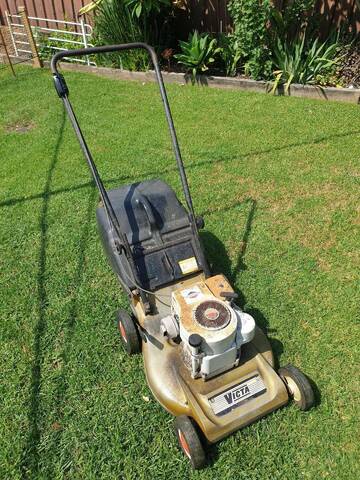
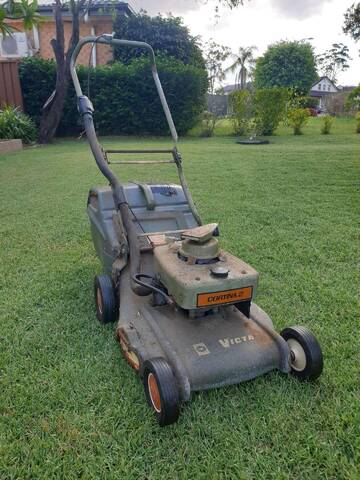
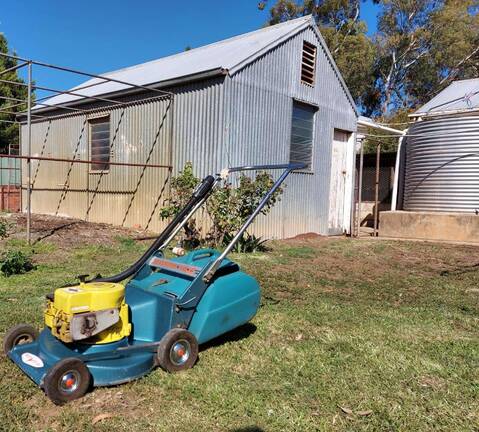
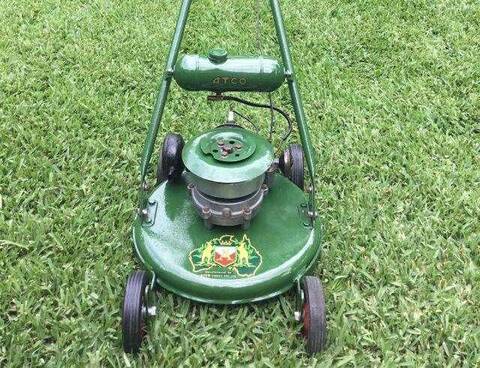
There is something odd about his explanation, Deejay. An 80300 (i.e. an engine with the first generation of the five-digit code used by B&S from the late-1950s until the China expedition in the late 1990s) would have an 8 cubic inch displacement, whereas Marvic's engine is 4.7 cubic inches according to his bore and stroke figures. It sounds as if Gary Stewart was not aware of the bore and stroke. There were several different B&S 4.7 cubic inch engines in the 1940s and 1950s, with the Model 5 (and later the Model 5S) probably being the best known. The 5S had a vacuum carburetor instead of the older engines' gravity feed, and was made in larger numbers than the 5. It may have been the transition model, when B&S began to change their small light-duty engines to the vacuum carburetors and low fuel tanks that we are all used to. Marvic's engine indicates that after they made that transition they retained some gravity feed engines alongside the vacuum feed ones, perhaps for slightly heavier-duty applications. Marvic - from the pics it seems your engine has an aluminium cylinder - does it have a cast iron sleeve inside it, or an aluminium bore? The light-duty engines of the period had aluminium bores, and the heavy-duty ones had cast iron sleeves.