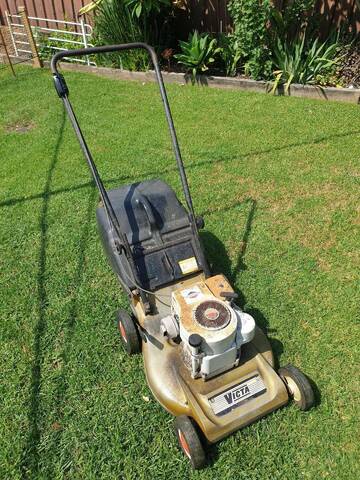
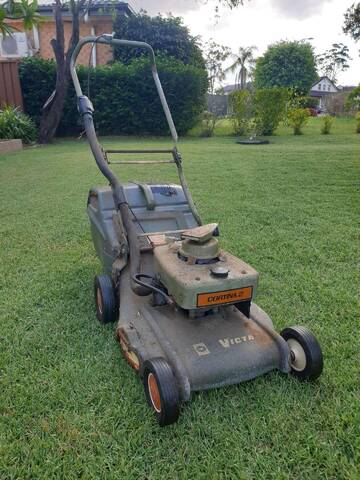
Hi all, recently bought an old victa mustang with a Honda gcv160 engine. Seller indicated it has sat unused for a while and couldn’t get the engine to start. I’ve done some work on the engine/carby, managed to get the engine to start with 1 or 2 pulls but was having some issues : 1. Engine stalls when switching to idle; 2. Once running on choke, engine was revving and running like crazy at very high speed. Tried to move away from choke to get to idle or lower speed but speed would drop to the point of stalling but revving up a bit on the handle to avoid stalling, will drive the engine to max speed ie doesn’t ramp up gradually. Can’t use the engine / mower at its current conditions.
Below some info on the engines and what I have done (apologies for the long post) :
- tired to start but failed - found no air filter in the filter housing and dirts are visible at the carby inlet, and choke plate. - remove carby, dismantled bowl, emulsion tube, and cleaned. Reinstalled and attempt to start engine and didnt manage to start after many attempts. Noted occasional back firing from air inlet pot when attempted to start. -removed and cleaned carby again. Replaced petrol in tank. Fuel tubing is not blocked as petrol is flowing when emptying old fuel. -opened and inspected valves gap. Noted no gap on suction valve. Adjusted both inlet and exhaust valve clearance. Replaced engine oil and replaced spark plug (although old plug seems ok), inspected ignition coil and observed corrosion spots and have sanded off corrosion. I have also adjusted the governor arm per Honda’s recommendations. -reinstated engine & carby and managed to start engine with one or 2 pulls but engine was revving like crazy. When attempted to switch to idle, it stalled. And when to avoid stalling by revving up a bit in handle control, engine immediately rev to crazy speed (not a gradual ramp up). Backfiring from the inlet is not totally eliminated but really rare now . Note air filter and housing were not installed for the run - I removed and cleaned the carby again, this time removed & cleaned the pilot jet. Air flow into pilot jet and outlet from the 3 tiny holes are confirmed clear. Also removed the pilot screw (with limiting cap), cleaned and confirmed clear. -checked exhaust pot and didn’t seem to have much blockage. Checked the usual fuel cap - no issue. -reinstalled and restarted but with same observations. I then adjusted the pilot screw to about 1 1/4 turn out, and increased throttle stop for more opening to help but engine still stalls or with high speed as observed above.
I think I have confirmed all channels in the carby to be not blocked. But I am not 100% sure of the fuel channel from emulsion tube to the throttle stop screw location - one area I need to check again.
I was aware of possible adjustment of the governor arm to adjust engine speed but haven’t managed to get to this due to issues above.
Note I have reused the old gaskets which all seem to be in good conditions with no tear etc.
Appreciate advice on next steps. A bit lost on what to do next. Gcv160 is the type with manual choke vis handle control.
The first thing I would fix is the over revving , the governor is not working properly or incorrectly adjusted .
In the image below the throttle cable goes to full rpm when you adjust the throttle lever on the handle then further movement moves the choke into the closed position ,so with choke fully on it should not put any more tension on the governor spring than at full throttle with choke open.
or another way to put it ,with choke fully on, the spring tension on the governor should effectively be the same as at full throttle with choke open; the difference is that the choke plate is now closed, not that the governor is “pulled harder.”
If pulling the lever into choke seems to pull the governor spring noticeably tighter or changes the throttle plate position beyond normal full‑throttle, then the linkage is mis‑routed or in the wrong holes.
You should be able to set full throttle on the carby and adjust the governor so it's not over revving ,then when choke is on it's not changing the governor tension.
Sometimes it's not worth spending a lot of time on cleaning a carby if they are cheap to buy new.
It is very likely but not guaranteed that the stalling is from the idle / transition (intermediate) circuit still effectively lean or partially blocked. Why it points to the intermediate circuit
If an engine will run strongly on full choke but dies as soon as you open the choke and try to go to idle or just off‑idle, that usually means the normal fuel path (pilot + transition ports + main) is not supplying enough fuel, so the engine is depending on the extra fuel from the choke to stay alive.
On the GCV‑series, very small amounts of varnish in the primary jet, emulsion tube, or the small progression/transition ports around the throttle plate can cause “runs on choke, stalls off choke” even when the engine will rev if you force it.
Thanks Max for your detailed explanation and advice.
I haven’t attempted to adjust the governor for the high revving issue as I was thinking of resolving the idling issue first.
With your advice, I’ll try to look at adjusting the governor and see how it goes.
As you’ve indicated, I also suspected the intermediate circuit to be partially blocked (fuel path in the yellow cloud in attached photo). The other path (greenish arrows) is flowing freely in both direction when I sprayed carby cleaner from both ends. The path in the yellow cloud may not get sufficient clearance… I might pull the carby to try clean this path.
I’m considering the new carby option but wanted to exhaust all options before I proceed with that. Getting help from this forum is a step further and I’m glad I’m receiving the prompt response & help from you already.
Thanks for your advice. Will update status after I check / adjust the governor.
Hi Max, quick update. I adjusted the governor, started the engine with the same high rev. I then did a manual check on the arm, linkage and throttle and found somehow the governor arm movement was restricted prohibiting closure of throttle. This was rectified and now the engine is running at good rev, ramping up and down smoothly.
Still stalling on idle so will clean the intermediate fuel path when I get a chance in the next few days.
Glad it’s one positive step ahead with the governor adjustment. I’ll report back on idling later - hopefully another +ve step froward to report. Thank you again.
It's good you have the governor working now ,if you weren't able to fix that it wouldn't have been worth spending more time fixing the engine.
There are also a few online repairers showing how to check the carby is cleaned out completely.
These engines idle at about 1800 rpm and you usually cut grass at 2500 to 3000 rpm so I've used mowers that it was unnecessary for the engine to idle when I've used them to cut grass ,as long as the motor isn't hunting.
Thanks Max. I’ve just pulled the carby, checked and confirmed the pilot fuel path / gallery I marked up above is blocked, despite attempts to clear blockages with carby spray & tip cleaners. Blockage may be deep within the long passage or behind the Welch plug. I might just use the mower as is while exploring options to clean that gallery (inc removing the plug). Thanks for your help again.
Update - there is actually no Welch plug for this passage. Passage is straight from the pilot jet screw down. I’ll try to use compressed air to blow through this passage.
I've heard of people cleaning the carby 3 times then using an ultrasonic cleaner before the carby works properly and sometimes people soak the carby in Acetone
You can soak metal parts in Acetone but make sure no rubber parts touch Acetone.
Soak metal parts only for 24 hours maximum to fully dissolve buildup while minimizing any risk to aluminum. Shorter times like overnight (8-12 hours) work well for lighter deposits, followed by brushing and air-blowing.
Effectiveness and Tips Pure acetone outperforms diluted cleaners for stubborn gunk on brass jets and castings. Check progress after 12 hours, rinse with clean solvent if needed, and always dry completely before reassembly.
Boiling a lawnmower carburetor in a 50/50 mix of white vinegar and water can effectively remove rust, scale, and light corrosion from metal parts like brass jets and aluminum castings.
Recommended Process Heat the solution to around 60°C (not a rolling boil) and soak disassembled metal components for 20-30 minutes, stirring occasionally for even cleaning. Rinse thoroughly with water, neutralize any residue with baking soda if needed, then dry completely and blow out passages with compressed air.
Limitations and Risks This method works well for mild buildup but may not dissolve heavy varnish as effectively as acetone; pure vinegar is often preferred over diluted mixes to boost acidity. Avoid prolonged exposure or boiling on aluminum to prevent pitting, and never include rubber, plastic, or coated parts, as acid can degrade them.
Or
Gently heat pure vinegar 100 percent to 50-60°C (warm, not boiling) on a stove or in a double boiler, then soak metal components for 30-60 minutes while stirring occasionally for effective rust removal without damage. Boiling risks accelerating corrosion on sensitive alloys, so monitor temperature closely.
Post-Cleaning Steps Rinse immediately with plenty of water, soak briefly in baking soda solution to neutralize acid residue, dry thoroughly, and blow out jets with compressed air.